Showing posts with label literature. Show all posts

Thursday, August 9, 2007

Harry Potter, Part II

Sorry for the delay! Here's the (hopefully) long-awaited follow-up to my original post about Harry Potter and the Deathly Hallows.
This post is going to address more thematic issues in the novel, and one that really gets developed in Deathly Hallows is the issue of parental love. In books 1-6, we hear over and over how it was Lily's love that saves Harry, almost to the point where you want to say, "Ok, we get it," but Rowling really expands the theme nicely in this novel. It's no longer only Harry's mom who loves him--Draco's mother, Mrs. Weasley, and Luna's dad all put themselves in extreme danger to save their children. This has the additional benefit of adding some gray to the novel--Luna's dad, who we would normally consider a "good" guy, tries to sell out Harry, Ron, and Hermione to save Luna. And Narcissa Malfoy risks her life and her standing with Voldemort to find out if Draco is still alive, making her a much more sympathetic character.

But the theme that really interests me the most in Deathly Hallows is the blatant Christian imagery, particularly at the ending. I've had little patience throughout the series for those who say it's "Satanic" or try to get it banned because of the elements of witchcraft in the novels. The themes of love and sacrifice have always been key to understanding Harry Potter, and although these are not themes exclusive to Christianity, they certainly can be read along with it, rather than against it.

But Deathly Hallows takes the Christian elements to a whole new level. In Chapter 16, where Harry visits his parents' grave, the inscription on their tombstone is "The last enemy that shall be destroyed is death," which is a quote from 1 Corinthians 15:26. And then, of course, chapter 35, which is entitled "King's Cross," essentially describes Harry's death and resurrection. Harry as a Christ figure who willingly and selflessly gives his life to save his friends is accompanied by Dumbledore as a sort of "God the Father." The added complexity of Dumbledore in Deathly Hallows makes thinking of him as the Father particularly interesting, since he is no longer the omnipotent, unquestionably good headmaster that we've known from the first 6 books of the series.

What interests me the most about this is that no one seems to really be talking about these themes. Reviews I've read talk about parental love, friendship, and how everything gets wrapped up nicely, but very few seem to bring up the Christian elements or the complex way in which they're developed. Newsweek had a brief blurb about it, but it in no way addressed the theme in any depth. It seems to me that this is a theme with a lot of potential, and I really hope that scholarship on Deathly Hallows in the future takes advantage of this.

Monday, July 30, 2007

Harry Potter, Part 1

Well, it's been over a week since Harry Potter and the Deathly Hallows came out, so here's my post on it. There's going to be a big picture of the cover, and then I'm going to freely talk about what happened, so if you don't want to read it, come back Wednesday for a rant about UHaul and why it sucks....


Ok, this part of the Harry Potter post is going to be basic things that I did and didn't like about the book. Tomorrow will be slightly more substantive comments on themes and other literary stuff.

Overall, I thought this was an excellent ending to the series. I had almost all my questions answered, all the loose plot ends were tied together, and it was a fun, exciting book to read. If it were to rate it like I do Netflix movies, I'd give it 4.5 stars out of 5. Here's a short list of the few things in the book that I think could have been improved upon:

1. The middle of the book. So much of the series' charm comes from the supporting characters that Rowling has introduced over the course of 6 novels, and in the middle 200 pages of this book, she completely cuts them out. We're stuck with Harry, Ron, and Hermione (and sometimes only Harry and Hermione) getting crabby at each other in the middle of the woods. I felt like this section dragged quite a bit and really didn't take advantage of so many of the strong characters that Rowling had created. That said, it's probably a "realistic" portrayal of what looking for the Horcruxes was like, but that still doesn't make it interesting for the reader.

2. I think Snape got completely cheated. His role in this book is reduced to getting killed by Voldemort and a bunch of scenes in the Pensieve. His character has long been one of the more interesting ones in the series, and the memories in the Pensieve show how important he is to Harry's fate. He deserved more pages in the novel and a more active role.

3. I was disappointed that Harry was a Horcrux. I didn't think there would be a graceful way out of that one, and I'm still not sure there was. I think the prophecy and what Dumbledore says to Harry in the dream-like King's Cross helps his death/coming back to life make more sense, but it's still not 100% clear, and there may even be contradictions. Maybe it's just one of those powerful forms of magic beyond our understanding, but that seems to be a weak cop-out.

4. The epilogue. I liked the idea, but I think it was poor in execution. There were too many kids running around, all named after people we'd already seen, so it was hard to keep them straight. And we didn't get to find out about so many of the people we cared about, particularly Luna. What happens to her? What sorts of careers do Harry and co. have? It always seems that the purpose of the epilogue is to name-drop as much as possible to let the readers know what's happening to the characters, but this one didn't come through on its potential.

5. I still think that Ron or Hermione should have died. Yes, a lot of semi-major characters died, but none of the big three. I would have liked to see Rowling really be daring with her deaths and show her readers the true cost of standing up for what's right. Since the three friends survive completely intact, it's easy to see the ending as unmitigatedly happy, which it isn't. But I'm not sure that comes through, because the reader doesn't have the emotional connection to the 2nd tier characters who died.

That said, that's about all the stuff in the book that I wasn't happy with. Overall, it was great, and I wouldn't be able to pick it apart like this if it weren't. Here are some of the specific things that I really enjoyed:

1. Harry's character. He really steps up to the plate in this novel, and I'm really glad. I was worried that he would be a passive hero, but instead, he really takes charge, and this comes through so much in his ending fight with Voldemort. Now, he's the one who's telling Voldemort what is happening and why, and it makes him seem much more actually heroic than in any other book.

2. Along those same lines, I loved that Harry stuck with Expelliarmus. The scene in the beginning where he tells Lupin he's not going to sink to Voldemort's level, and then how that comes full circle in the end when he disarms Voldemort, which ends up killing up--that was fantastic. I think that was my favorite moment in the entire book, and when I realized what had happened, I started crying. Rowling really did something amazing there.

3. I was thrilled that Ron was the one who got the sword of Gryffindor from the pond. He's lived in Harry's shadow for so long, and it was nice to see that he was given his moment to shine.

4. I was also very excited with how Neville stepped up and became a hero, and how his grandmother recognized that. The almost-casual way that he talked about the horrible things going on at Hogwarts, as well as the way that he bonded with the Room of Requirement, really showed how connected he was with the castle and how brave he really was. And, of course, this comes through perfectly when he pulls the sword from the hat.

5. I liked Mrs. Weasley calling Bellatrix a "bitch" and killing her. That was fantastic.

6. I liked the addition of searching for the Hallows in addition to the Horcruxes in this book. I think it made it a book that has a plot of its own, rather than just following something set out in book 6.

7. I was really excited to see how some of the characters became less good or evil and more gray. Dumbledore, Dudley, and Petunia all became much more interesting because we see a completely new side to them. The explanation of Dumbledore's past, in particular, really added depth to the book.

Ok, I think that's it for now...stay tuned for Part II tomorrow!

Wednesday, July 25, 2007

Jane Austen in the 21st century

Would Jane Austen get published in the 21st century? That's the question that David Lassman, director of the Jane Austen Festival in Bath, England, wanted answered. So, he sent out slightly modified excerpts from several of Austen's most well-known works, starting with Northanger Abbey. When none of the publishers accepted or recognized this submission, he turned to a slightly better-known work--Persuasion. Still no luck. So, in a final attempt, he sent off Pride and Prejudice.

With only superficial modifications--changing the Bennets to the Barnetts, and Netherfield manor to Weatherfield--still only one publisher recognized the submission for what it actually was. And that was with the first line of the novel completely unchanged.

For those of you who aren't Austen fans or English majors, this first line is one that if you're in the business of literature, you should know: "It is a truth universally acknowledged, that a single man in possession of a good fortune must be in want of a wife." It ranks right up there with "Call me Ishmael" and "It was the best of times, it was the worst of times."

Lassman was pretty appalled at the results of his little experiment, and rightly so. But I think it's even more interesting to think about why these results happened. Three reasons come to mind:

1. Most of the editors/agents didn't even read the submissions. This seems pretty likely, since many of them are frantically backpedaling now that they've been called out as companies that can't even recognize Jane Austen. Several of the companies have even admitted that although their form letter might have said the work seemed "original" or "interesting," they probably didn't even read it. For many authors, this confession is probably even more depressing than the idea that publishers can't identify Austen's work--how are they supposed to get their brilliant novel published if it won't even be read?

2. Another possibility for these results is that the publishers, in fact, did not recognize Jane Austen's work. This is pretty appalling, since publishers are supposed to be able to judge literature with some sort of authority, and without having a solid basis in really great novels from history, how will they be able to do that?

3. Finally, and perhaps most interestingly, is the possibility that Jane Austen would actually not get published if she were alive today. It seems entirely possible that the generations of readers that enjoyed and had time for reading the kind of novels that Austen wrote have passed. I mean, let's face it. These books aren't exactly thrilling adventures. And there's not a lot of actual sex, although it's implied. Austen's novels are more about subtlety, ironic humor, and complicated relationships between human beings. The National Endowment for the Arts has done this study about how reading, specifically reading novels, is on the decline. I don't see this as a necessarily terrible thing. Literature changes. The novel wasn't always in existence, you know. It came to prominence as a literary form only a few hundred years ago. So there's nothing to say that it has to last forever. Particularly with the rise of the cinema and the internet, people are absorbing their stories and doing their reading in ways that aren't traditional, but aren't necessarily bad. What would concern me is if we, as a society, are no longer interested in the types of stories that Austen told. It takes a bit of patience to get into them, but once you do, they're rich, rewarding, and a lot of fun.

Let's hope this isn't the case. Since movies such as Pride and Prejudice and even Becoming Jane, which is a biography of Austen's life, keep getting made, it seems that there's hope that we still love these stories, just in the media of the 21st century.

But on the other hand, if you have time this summer, pick up a copy of Pride and Prejudice--the book--and give it a chance. You won't regret it.

Monday, July 2, 2007

The human element in fantasy literature

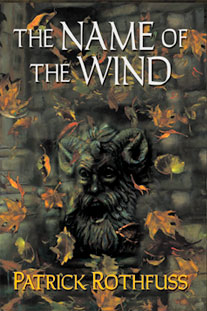
A month or two ago, my friend K. recommended a book to me called The Name of the Wind by a newly published author named Patrick Rothfuss. She lent me a copy of the book, and I then proceeded to read it cover to cover in the next 48 hours. It's a 662 page book.

In short, I loved it. And for a while, I've been trying to figure out why I liked it so much, as well as what made it original.

Because on the surface, it doesn't seem particularly original. It's the first of a trilogy (Tolkien and others), the protagonist--Kvothe--heads off to a university to learn magic that involves knowing the true names of things (Le Guin), and Kvothe has awesome abilities that set him apart from the other students at the school (Rowling, Pullman, Nix, too many to name).

Yes, many of these things are what fantasy fans love to read about, but this book is much more creative than genre fantasy. Rothfuss doesn't just recycle plot devices and stock imagery. He changes it, makes it his own, and adds humanity to it.

That's where I think Rothfuss's real strength lies. His hero, Kvothe, is a hero who more than anything, is human. He makes mistakes. He does really stupid stuff. And he gets punished for doing that stupid stuff. Also, when we first meet him, he is a broken older man, who is living in a small town barely making a living as an innkeeper. When the innkeeper tells us his story, and how he started out as this extremely gifted boy, it's hard to believe that such a hero could end up as he is now. In short, Kvothe isn't the perfect wizard who always knows what to do and always comes through for those who need him. He's a human who makes mistakes, who also happens to have magical powers.

This is what sets Rothfuss apart from other fantasy authors. Take Lord of the Rings, for example. Gandalf makes a mistake...sort of...by leading the fellowship through the Mines of Moria. But it wasn't because of a character flaw on his part; he didn't do it because he was selfish or jealous. He did it because he thought it was the only way, and simply didn't know any better.

Harry Potter is another good example of why Rothfuss' novel stands out. Rowling has done great things with Harry, particularly in books 5 and 6 where she shows how Harry can be petulant, self-involved, and whiny. She has done a good job of making Harry a real kid first, and a super wizard second. But the problem with Harry, particularly within Hogwarts, is that he rarely gets into any sort of lasting trouble. Fly a magic car to school? No problem! Use a potentially fatal spell against a classmate? He'll get over it. Take a particularly nasty teacher out to the Forbidden Forest to be stampeded by centaurs? Well, she didn't die, did she? In book after book, Harry, Ron, and Hermione break rule upon rule, and they always get away with it. The worst that's ever happened to Harry (within the realm of Hogwarts) is that he had to miss the Quidditch championships, but expelling him or inflicting a more lasting punishment on him seems out of the question. Yes, things outside of Hogwarts have happened when Harry has broken the rules (the end of book 5 is particularly notable), but within Hogwarts, Harry is the golden boy who can do no wrong.

Kvothe gets no such breaks. A mistake at the beginning of his term at the university--one that he was directly responsible for because of his impatience and need for revenge--has long-lasting consequences that really impede his development as a wizard. He's always in need of money, unlike Harry who has all the gold he could ever want in the bank. And his desire to show off and be the best always seems to get him into trouble. He's irritating at times, enough that you want to smack him on the head and say, "What were you thinking?"

But the other thing that Rothfuss does extremely well is tell the story through Kvothe's eyes, and as a result, all his choices and decisions seem perfectly logical. And so instead of sitting off to the side, chastising Kvothe in advance for his bad choices, you are right there with him, agreeing that whatever it is he's doing is the only possible thing under the circumstances. Only later do you want to ask, "What were you thinking?" but by then it's too late, because you and he together have already made the choice that caused so much trouble.

Many fantasy authors, it seems, think that by including dragons, wizards, and magic, they can cover up a host of other faults, particularly lack of character development and an uninteresting plot. Rothfuss has no such illusions. For The Name of the Wind, the characters and the plot are what make the book great and extremely original; the magical elements are the subtle seasoning that adds the perfect finishing touches to the novel.

Wednesday, June 27, 2007

The Life of Pi

I picked up this book because I had heard from several people that it was good, and also because it won the Mann Booker Prize, and so any late 20th/21st century fiction scholar worth her salt better read it. I bought it, put it on my shelf, and then forgot about it in craziness of writing my dissertation.

As a quick aside--I think that for those writing or researching dissertations, that process is much like deciding which college you want to go to during your senior year of high school. It's stressful, you don't really want to think about it if you don't have to, there's the pressure of deadlines, and it's what everybody always asks you about. I'm honestly grateful for all those who show interest in what I'm working on, especially considering that when I eventually try to publish it after I graduate, if it gets published, six people will buy it and they will all be related to me. But it just feels that right now, my whole life is hanging on me finishing this thing, and I'd do anything to not think about the deadlines that are looming closer and closer. So if at some point, you ask "How's the dissertation?" and I scowl at you and say something snarky, please understand that it's nothing personal :)

Anyways, back to The Life of Pi. I picked it up two nights ago when I was stressing out about everything I had to do and I couldn't fall asleep. I needed to read something NOT related to my dissertation, and I finally remembered this book sitting on my shelf. And before I knew it, I was 40 pages into it.

It's a really fast, interesting read. I bogged down a little in the middle because it seemed slightly repetitive, but things picked up again quickly. Basically, the novel tells the story of Pi Patel, whose family is moving from India to Canada via freighter. The freighter sinks, and Pi ends up stranded on a lifeboat with a fully grown Bengal tiger.

This book will be interesting for those who enjoy survival stories, but it's much more than that. Before Pi moves to Canada, he has become a devout follower of Christianity, Islam, and Hinduism. Thinking about how his religious beliefs connect with the survival narrative that follows is thought-provoking and insightful.

Plus, who doesn't like a book filled with wild animals? It's the same sort of excitement as going to the zoo, without having to leave the comfort of your own home.

Wednesday, June 20, 2007

Timeless literature

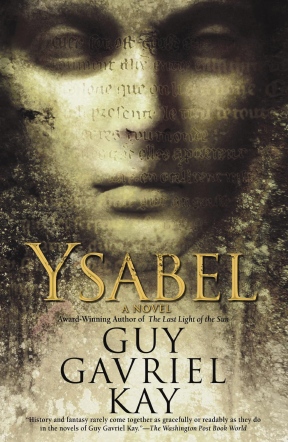
I recently finished Guy Gavriel Kay's book Ysabel, which is a great read for those of you who enjoy fantasy literature, and particularly for those of you who enjoyed Kay's series The Fionavar Tapestry. It's a very well-written book that does what Kay does best--lyrically hint at mythic, cyclical, epic significance without coming straight out and saying it.

That said, there was something about the book that struck me as just a little bit off, and I wasn't quite sure what to make of it. The novel is set in the Provence region in France in today's time. After visiting the cathedral in Aix-en-Provence, teenage Ned Marriner comes into contact with several people who are important figures in ancient history and legend. Throughout the novel, if he and his friend Kate need to find out something about history or myth, they rush straight to the Internet--Google is mentioned at least 20 times as their source of information. And everyone is always reaching for their cell phones; there's even a running joke throughout the novel regarding ringtones.

Kay's use of today's technology in his novel really makes for a stark juxtaposition between the present and the past, sometimes to great effect. But at the same time, I can't help wondering if his reliance on this technology--technology that probably won't be cutting-edge in 10 months, let alone 10 years--will ultimately undermine his efforts to highlight the relationship between the real present and the fantastic past. In 20 years, will anyone remember what the verb "googling" means? Will cell phones be a thing of the past, since everyone has chips implanted in their brains? I don't mean this to be a post predicting radical changes in our lives in 20 years, but I do think that technology is changing and developing at such a rapid rate that the technology we use today will be outdated in 5 years, not to mention 20.

And so, while Kay's invocation of cell phones and Google is a great shorthand for those reading the novel in 2007, I think that in 20 or 30 years, the novel won't be as powerful, since these bits of technology will no longer be able to bring to mind the cutting edge of the present. The novel will still be interesting and well-written, but the contrast between past and present won't be as dramatic. And so the novel will lose some of its force.

Julia Turner has written something similar about the Harry Potter series, arguing that Rowling is able to create such an overwhelming feeling of terror in connection with Voldemort by invoking the language and imagery of the current war on terror and Osama bin Laden. Her hope and fear for the Harry Potter series is the same as mine for Kay's novel--she doesn't want the series to lose its power, but at the same time, she's afraid that by using this cultural shorthand, the novels will lose their impact on future readers. Rereading the series, I can see where her concerns come from, particularly in later novels such as The Order of the Phoenix. Things familiar to us because of the current political climate--governmental handouts on what to do to be safe, newspapers printing things they want us to believe, rather than the truth, prisoners being held without trial, an invisible, untrackable enemy--all show up in Harry Potter to add to the feeling of terror and fear in the reader.

I think Potter fans have less to worry about than fans of Kay's novel Ysabel. As many people have noted, warfare has changed drastically in the 21st century, and terrorism seems to be the new face of war. And no one is going to forget the events of September 11, 2001 for many years. Even when Google is long gone, this date in history will still be remembered at least in history books.

Tuesday, June 19, 2007

Will Harry Potter Die?

Well, the wait is nearly over. In one month, the final Harry Potter book will be delivered to my doorstep, and I will finally know how the series concludes. I am really, really excited. I can guarantee that I will drop everything I'm doing to read that book as soon as I get it. Dishes will go neglected, my phone will be unanswered, and I'll probably forget to eat.

The rest of the world seems similarly excited. Many questions are being tossed around on the hundreds, probably thousands, of forums that are discussing this final book--Harry Potter and the Deathly Hallows. Will Harry go back to Hogwarts? Who is R.A.B., the mysterious wizard who destroyed the Horcrux that Harry found the night Dumbledore died? Is Snape really evil, or is he part of a bigger plan for overall good?

The biggest questions, however, surround the question of who is going to die in this final installment. Rowling herself has said that two main characters will die in Deathly Hallows; fans of the series are beside themselves, wanting to know if Harry is one of these two. Rowling made a comment that added further fuel to the fire, saying, "I can completely understand, however, the mentality of an author who thinks, 'Well, I'm gonna kill them off because that means there can be no non-author-written sequels. So it will end with me, and after I'm dead and gone they won't be able to bring back the character'." I can certainly understand her sentiment--poor Margaret Mitchell is probably still rolling over in her grave because of the atrocious sequel to Gone with the Wind called Scarlett. But Rowling hasn't gone so far as to say whether or not Harry actual dies.

The general consensus seems to be that he will--British bookie William Hill has stopped taking bets on the question, since so many people have bet that Harry will die, that it would be like giving money away. Apparently, he is now taking bets on who will kill Harry.

As I suggested earlier on this blog, I don't agree with these people. I think Harry will live. I think Voldemort will die. And I'm more sure about the latter than the former. I'm 100% sure that Voldemort has to die, otherwise...well, otherwise the whole series will be about the ultimate triumph of evil over good. And that would undermine so much of what Rowling has included in her novels about how love is the most powerful kind of magic, that Voldemort has never understood love, and that Dumbledore will always be around for those who need him. Rowling has been building up to the ultimate triumph of good over evil throughout the entire series, and if she were to let Voldemort live, that would undermine the logical sense of the series.

I'm slightly less sure that Harry will live. Some people think that Harry is the final Horcrux, and that in order to destroy Voldemort, Harry will have to destroy himself first. This would be an interesting parallel to the first book, in which Ron uses the queen's sacrifice in the giant chess game, allowing Harry to get through to the Sorcerer's Stone and Voldemort. Although this time, Ron (or Hermione) would probably be the one who would defeat Voldemort. I think this theory has possibilities, but I'm pretty sure that Voldemort would want to make sure that he had all his Horcruxes firmly in place before going to kill "the one with the power to vanquish the Dark Lord." Also, I really don't want Harry to die. And I think that Rowling knows this--not about me personally, but about her readers. I'm not saying she'll sell out to her readers, but I wouldn't be surprised if the question of "What will happen if I kill off Harry?" crossed her mind while writing, and played into her ultimate decision.

I have several ideas of who the second person is who will end up dying. Snape seems like a good bet, since his death could be what ultimately shows his loyalty to the Order and to Dumbledore. I think there's still a lot we don't know about Snape--including why Dumbledore trusted him; Harry's explanation of this at the end of book 7 just doesn't hold water. His death for a greater cause--either good or evil--would help clear up these questions.

I also think that one of Harry's close friends could be the second major death. The reason this option seems the most likely is because it would allow the series to end on an ambiguously positive note without Harry dying. For example, if Ron were to sacrifice himself to save Harry, this would create all sorts of complicated emotions on Harry's part that would be in line with the developing emotional complexity of the series.

Regardless of what happens, I am extremely interested to see how Rowling resolves the series. I would love for an unequivocally happy ending, but I think that will be very difficult to pull off given the way each book develops the theme that Harry is a wizard set apart, a wizard with a terrible past and an uncertain future. Certainly, the book could just end with Voldemort and Draco dying, and nothing happening to the "good" side, but that wouldn't ring true with the world Rowling has created, in which both sides of the battle suffer losses. But on the other hand, she can't go too far in the other direction either, since, like I mentioned above, that wouldn't follow the logical progression of the rest of the series.

So, what do you all think? Does Harry die? How will the series end?

Monday, June 4, 2007

You can't have it both ways

Every once in a while, you come across something--a book, a movie, a politician--that is both praised and excused for the very same quality. Perhaps my favorite example of this is something fantasy author Pat Rothfuss said to me about the book Eragon, which was written by Christopher Paolini when he was 15. Many people praise the book: "It's such a great book, especially for someone who is only 15." But then, when the book is criticized by the many people who think the book is a poorly written knock-off of Lucas and Tolkien (myself included), those who love the book say, "Give the guy a break, he was only 15."

As Pat aptly pointed out, "You can't have it both ways."

You can either praise someone for being a brilliant author at 15, or you can excuse someone for writing tripe because he's 15. But you can't praise and excuse him. It just doesn't work that way.

I think the same thing can be said about Andrew Speaker, the attorney from Atlanta who recently defied doctor's orders in order to fly home from Italy, even though he is infected with extremely drug-resistant TB, XD-TB for short. This strain of tuberculosis is resistant to all conventional TB treatments, making it quite scary. And airline flights, because of their closed-air systems, are a particularly bad place for someone with this disease to be.

Speaker flew from the US to Greece for his wedding, even though his doctor recommended that he not go. Then, when the CDC wanted to detain him in Rome because they had found out that Speaker had XD-TB, Speaker decided to fly home anyways. But he had to fly through Canada, because he had been put on US "no-fly" lists. Huh.

Speaker recently had an interview with Diane Sawyer on Good Morning, America, where he "apologized" for what he had done. The best part of the apology was when he said to one of the passengers who was seated next to him, "I'm sorry for your fear." Looks like he's taken a lesson from celebrity apologies...

Anyways, if you watch the interview, Speaker says two things over and over:

1. In the first part of the interview, he says that he didn't think the disease was a big deal, he didn't think it was contagious, he didn't think it was a problem if he traveled or was out of the country.

2. In the second part of the interview, he talks about how scared he was that he would never get back to the United States, and how he thought he was going to die if he didn't get back to the special clinic in Denver for treatment. At first he just said that he thought he was going to die in Rome, but as the interview progressed, he just kept saying that he thought he was going to die.

And this is where I see the problem with what he's saying. Either he knew before he flew that his disease was really awful and needed special treatment--in which case he shouldn't have flown in the first place--OR he didn't know before he flew how bad the disease was, and his knowledge that he needed to immediately return to Denver, whatever the cost, is inexplicable and unjustifiable.

It's not quite the same as those who both praise and excuse Eragon, but it's similar. Speaker is trying both to negate the problem and make us feel sorry for him having this awful disease, but the way I see it, they cancel each other out.

You can't have it both ways.

Don't get me wrong. I think this disease sounds terrible, and it's awful that anyone should have it. I don't want Speaker to die from it (as apparently other bloggers have said)--I hope that doctors find a treatment and are able to cure him. I hope that he and his wife have a wonderful marriage and they have many great years together.

But I do think that he should step up and take responsibility for what he's done. I think that he should realize that right now, this is not about him and how scared he is or how bad he looks in the media. It's about all of the rest of the world, and how scared we are that some stupid action on his part may have put us or our loved ones in danger. I have sympathy for Andrew Speaker because he has this disease, but in no way does that give him an excuse to act without thinking and endanger others.

Thursday, May 24, 2007

The Kite Runner

My mother-in-law lent me this book a long time ago after her book club read it, and I had just never gotten around to reading it. Now, since I have a lot more spare time since I'm not playing World of Warcraft anymore, I've been catching up on my reading. Borrowed books are first on the list to be read.

And I have to say, this book completely sucked me in. I started it one afternoon at about 3, and I finished it before I went to bed. (I read fiction really fast.) I really couldn't put it down, except for once, where I was so shaken by what had just happened that I needed a break.

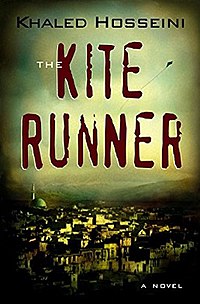
The Kite Runner is narrated by Amir, a young man who grew up in a well-to-do family in Kabul, Afghanistan, and who now lives in California. He tells the story of his life, focusing primarily on his relationships with his father and Hassan, a lower-class, lower-caste servant who grew up with him in his father's home.

I'm not going to tell any more of the plot, other than to say that it grabs you and doesn't let you go until the end. But for those of you who choose to read it, I'd recommend trying to get away from it once it a while. Force yourself to take breaks. Because The Kite Runner, in addition to telling the story of Amir, also tells the story of Afghanistan, and that story includes very real people and events, including the Taliban and ethnic cleansing. This historical backdrop to Amir's story gives the novel a feeling of reality that makes the fictional events hard to shake, which makes for a very intense reading experience.

Thursday, May 17, 2007

Al Franken Tells it Like it Is

In the interest of full disclosure, I'm an Al Franken fan. I think it's mostly because he's planning on running for U.S. Senate from Minnesota against Norm Coleman. Now, I'm in favor of anyone left-of-center winning a U.S. Senate or House seat in Minnesota, because it will help balance out that horrible abomination that is Michelle Bachmann.

Lucky for us Minnesotans, like Michelle Bachmann, Al Franken is in direct communication with God.

In fact, according to Al's book Lies and the Lying Liars Who Tell Them, God told him to write about how Al Gore had really won the election, how Bush had idiotically squandered the nation and world's goodwill after 9/11, and how it was making God mad.

Here's how the conversation between Al and God went:

"Look, God, I'm flattered, but if think you got the wrong guy. The kind of book you're talking about would require months of research."
And God said, "Let there be Google. And let there be LexisNexis."
"Very funny, God. I use Google all the time."
"Yes, I know," God said. "For hot Asian teens."
"You must be thinking of my son, Joe."
"Al? I'm omniscient."

Looks like God (and Al, for that matter) have a pretty good sense of humor. That sense of humor is what makes Franken's book a pretty good read. Like many things written about politics, from people on either side of the aisle, the constant reminder of how strict bipartisanship is screwing over America is a little depressing. And, if you happen to be a huge fan of Ann Coulter or Bill O'Reilly fan, this probably isn't the book for you. Some of the information--about Fox News, or about Cheney and Halliburton, for example--has been repeated in other sources, such as Michael Moore's documentaries.

That said, is is quite funny. I was sitting and reading it on the couch, giggling to myself. My husband would say, "What now?" and I'd read the funny bits out loud to him (he'd already read it). This book would not be a good bus book for me, since the people sitting next to me would think I'm nuts. (For the record, other bad bus books are The Education of Little Tree because it made me cry while I was reading it on the bus and Lolita because I'm pretty sure everyone around me thought I was some sort of pervert. I'm not.)

The other good thing about this book is that it inspired in me a healthy sense of outrage. It's pretty easy to sit on your couch, watch TV, and forget much of the crap the Bush administration has pulled. Reading Franken's book reminded me of a lot of that stuff--and not just stuff that would enrage liberals (like the claims about the 2000 election being rigged), but stuff that should enrage everyone, like the US pulling out of the Kyoto treaty and the enormous increase in the national debt. Books like this, even though they are biased a certain way, are an important part of a democracy because they make their readers feel something--either rage against the author, or rage against what he's writing--and that spurs them to get involved. Stay tuned to see how I've channeled my anger...

At any rate, this week's quote comes from Franken's book. Go ahead, read it. Get it? No? Read it again.....there you go :)

Hehehehe.

Friday, May 4, 2007

David Mitchell

There are many kinds of authors in the world, but there are two in particular that I'm going to focus on today: authors who write brilliant books (and may or may not know it) and authors who write brilliant books, know it, and let you know that that they know it.

David Mitchell is the second kind of author. He can create wonderful characters, suggest complicated meaning, and twine plot lines together remarkably smoothly. The problem comes when he thinks that he readers won't catch this, and so feels the need to tell them how brilliant he is.

Quite frankly, that pisses me off. I hate it when authors underestimate me and feel that it's necessary to spell out the meaning of their books. In Mitchell's second novel Number9Dream, one of the big themes is the meaning of the protagonist's life and what his identity is. I get it. And I definitely get it without Mitchell sitting his protagonist--Eiji Miyake--down with one of his friends to discuss the meaning of life. I enjoyed the characters, I found the plot interesting, but I was turned off because I felt talked down to.

What's most frustrating about this is that by pulling stunts like this, Mitchell undermines his own brilliance. Truly wonderful authors are able to convey their main themes and ideas without staging elaborate, artificial conversations about these themes.

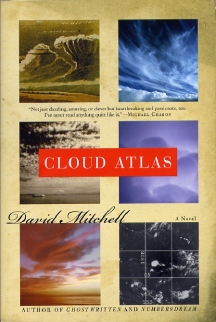
Mitchell's third novel Cloud Atlas, pulls a similar stunt, but with the structure of the book. The book is a series of stories, organized like nesting dolls. Each of the stories has something in it that connects it to the previous story, such as the protagonist of story 2 is reading the diary of story 1. It's clever, and interesting, and makes you want to see how the stories all connect together. But in one of the stories, the protagonist is a composer who's writing a piece with a structure like the novel. At some point, the composer makes the comment that this structure is either brilliant or a cheap gimmick. Now, any author who will put something that self-referential into his novel must be darn sure that it's brilliant, otherwise he'll risk looking really stupid. And while I certainly don't hesitate to call an author brilliant, an author calling himself brilliant is irritating. And cocky. And again, it sells me short. Mitchell is unsure that I'll recognize his brilliance, so he makes sure to tell me.

Mitchell's first novel, Ghostwritten, avoids these problems for the most part, and as a result, I actually really liked it. Like Cloud Atlas, it weaves seemingly unconnected plots and characters together, but does it in such a subtle way that initially, it could be missed. And throughout the novel, Mitchell hints at a greater meaning, particularly in the "Mongolia" section, but does so without coming out and directly addressing the theme that he wants us to notice. I also liked the characters a lot--there's a sassy physicist that I just loved (Hey P., I think you'd get a kick out of her too...she uses data from CERN). And I disliked one of the main characters, not because she wasn't well-written, but because she was written so well that I could picture her exactly and knew I wouldn't like her. Overall, I really liked the novel.

Mitchell has a fourth novel out that I haven't read yet called Black Swan Green that I really hope tends more towards the organic, unconstructed feeling (while still being extremely structured and constructed) of Ghostwritten than his later work. That's where Mitchell's talent really shines through, unobstructed by his own commentary.

But then again, maybe I've completely misread these novels and David Mitchell is simply too brilliant for me to even understand.

But I doubt it. :)

Thursday, April 26, 2007

Harry Potter and the Two-Way Mirror

I've been rereading some of the Harry Potter books in preparation for the big day, and as I was rereading book 5--Harry Potter and the Order of the Phoenix--I came across something that I wasn't quite sure what to make of.

By the way...I am going to talk freely about what's happened to Harry through the end of book 7 in this post, so if you haven't read the books yet but plan to, this might spoil things for you.

If you remember, in book 5, Harry keeps having these dreams/visions where he can see what Voldemort is doing; in the climax of the book, he sees Voldemort attacking his godfather, Sirius. Because of this vision, Harry and some of his closest friends rush off to the Ministry of Magic to find Sirius, only to find out that it was a fake vision, just a trap to lure Harry away from Hogwarts. In the battle with Voldemort and his Death Eaters that follows, Sirius is killed. As might be expected, Harry feels awful about this; at the beginning of chapter 37, Harry is crushed by guilt, thinking, "It was all his fault Sirius had died; it was all his fault. [. . .] It was unbearable, he would not think about it, he could not stand it."

Before Harry charged off to the Ministry of Magic, he did try to figure out whether his vision was fake by using the Floo Network to visit Sirius' house. But instead of finding Sirius there, we find the sneaky house-elf--Kreacher--who says that Sirius is gone, which, we later learn, is a lie. Sirius was safe at home the whole time.

Got all that? Harry is indirectly responsible for Sirius' death, but he did try to check the accuracy of his vision, even if he should have suspected Kreacher of being dishonest.

Here's where my question comes in. When Harry leaves Sirius' house after Christmas break is over, Sirius gives him a gift, saying "use it if you need me." Harry mentally refuses to open it, knowing that "he would never use whatever it was. It would not be he, Harry, who lured Sirius from his place of safety..." (chapter 24). After Sirius' death, Harry opens the gift, hoping that he will somehow be able to contact Sirius beyond the grave. The gift is a two-way mirror that would allow Sirius and Harry to talk to each other, but is not strong enough to cross the barrier of death.

The mirror then becomes this piece of incredibly ironic foreshadowing. Harry is in fact the one who lures Sirius from his place of safety, and if only he had used the mirror, it wouldn't have happened. But what I find really interesting is that Harry never realizes this. When I read the scene in chapter 38 where Harry unwraps the mirror, I feel an unbearable sense of regret--if only Harry had used the mirror instead of trying to go and save Sirius. For me, the mirror is a painful reminder of Harry's biggest mistake, the mistake of not opening and using Sirius' gift. Harry, however, doesn't feel this regret; for him, the mirror is simply a potential way of contacting Sirus after death. It never crosses his mind that if only he had opened the mirror sooner, Sirius would still be alive.

Why doesn't Harry realize this? What does it mean that Harry doesn't recognize his incredible mistake in not using the mirror instead of the Floo network to try to talk to Sirius the night of his vision? Is it, as some have suggested, simply that Rowling needed a better editor for books 4 and 5? Or, as my friend K. said to me yesterday, perhaps Rowling didn't want to give Harry more than he could handle. He was devastated by all sorts of hypothetical "what ifs?" that come to anyone who has lost a loved one; perhaps knowing that he should have actually done something would be too much for him to take, and he would have been completely incapacitated by grief. Or is it a sign of his immaturity that Harry doesn't realize the true role he played in the tradgedy?

I'm also wondering what it means that I feel regret for something that doesn't even occur to Harry. I can't come up with other examples in fiction where this has happened to me. Yes, I've felt anger at characters for doing stupid or mean things, but I don't ever remember feeling regret for something the protagonist did--meaning that I've identified with and like him/her--that he/she doesn't already feel. Maybe this is a brilliant, deliberate move on Rowling's part to set her mature readers apart from Harry. Although most of the content of the book is set in a high-school-like setting, the conflicts of friendship, romance, leadership, feeling useless, etc. are ones that appeal to all ages, and therefore it would be easy to expect too much from Harry. Perhaps by creating an emotional state in her readers quite different from that in Harry, Rowling is saying, "Yes, he's a great wizard, but he's not grown up yet. Give him a little more time."

To end on a side note: for those of you who are wondering, here are my predictions for book 7:
  • Dumbledore is really dead (not much of a prediction anymore, since Rowling has pretty much confirmed it).
  • Harry won't die, but Ron or Hermione (or perhaps Ginny) will, creating an uncrossable rift between Harry and those closest to him.
  • Voldemort will die.
  • Snape will turn out to be good.
It's April 26, 2007. Have you preordered your copy of Harry Potter and the Deathly Hallows yet?

Saturday, February 3, 2007

The Book of Lost Things

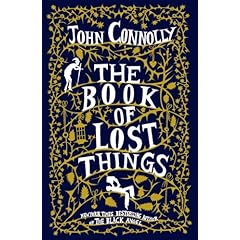
John Connolly's The Book of Lost Things is one of the best books I've read recently. It tells the story of a young boy, David, whose mother dies and whose father remarries. Upon his father's remarriage, he moves away from London to the country, where he begins to hear books talking to him. After a series of fights with his new step-mother, and ultimately, his father, David is drawn into a fantastic world created from the books he has read.

Connolly's prose is unbelievably beautiful, and even more than that, has incredible flow that draws you into the story and effortlessly pulls you along. It was one of those books that made you keep reading. Actually, words like "pull" and "made" are too strong of words to describe the effect of Connolly's prose, since they suggest force. It was more like floating down a river on an inner tube, being guided by a gentle current.

I only put the book down once, and that was after David escaped from a particularly horrible situation. A note of warning: although the hero of the book is a young boy, this is not a book for young children. Some of the images are horrifying and gruesome, and the fairy tales in the fantasy world are the original versions, not the watered-down, Disneyfied ones that always have happy endings.

For me, what made this book so appealing was how real it was. Throughout the story, David feels incredible guilt over the death of his mother, thinking that if only he had carried out his daily routines more diligently, she would still be alive. I know that these feelings were definitely ones that I could identify with. David's character is just one example of this; even though most of the story takes place in a fantasy world, Connolly carries this reality throughout his book. He doesn't shy away from the horrible things that happen in life, nor does he shy away from the beautiful things. And because of this, it makes the joy, wonder, and hope that David experiences that much more real for the reader.

Friday, January 5, 2007

Imagination; or, the Failure of Reality

So I've been rereading Anne of Green Gables in my spare time over the semester break, and over the course of the reading, I've been struck with what a great place Green Gables would be to live. When Anne wakes up her first morning in Green Gables, she's struck by the amazing beauty of the place:
A huge cherry-tree grew outside, so close that its boughs tapped against the house, and it was so thickset with blossoms that hardly a leaf was to be seen. [. . .] In the garden below were lilac trees purple with flowers, and their dizzily sweet fragrance drifted up to the window on the morning wind.
Below the garden a green field lush with clover sloped down to the hollow where the brook ran and where scores of white birches grew, upspringing airily out of an undergrowth suggestive of delightful possibilities in ferns and mosses and woodsy things generally (Anne of Green Gables, chapter 4).

Now, for me, this sounds like an amazing place to live. A brook, a
house surrounding by flowering trees, grassy meadows, hills...what more could you ask for? It's even set apart from the center of town, to give it more privacy. In my opinion, it would be the perfect place to live.

I hadn't really given much thought to the way the house itself looked, except that it would have an interesting shape, with all sorts of arches, gables, and maybe even a turret. It was the perfect place for someone who loved fairies, and dryads, and all kinds of enchanted things--someone like Anne, and also, someone like me.

But then, when I looked up Anne of Green Gables on Wikipedia, I can across this picture of the house that inspired Lucy Maud Montgomery as she was envisioning Green Gables:

To be honest, I was horribly disappointed. It's too...well...open. And too sunny. And the gravel driveway takes away any romance the place might have. The house itself isn't right either; it's too boxy, too much of a common farmhouse.

So maybe Anne and I are alike in another way. We both prefer our imaginations to reality, because then we "can imagine what [things] looked like, without being hampered by facts" (Anne of Avonlea, chapter 13).