Showing posts with label movies. Show all posts

Monday, September 3, 2007

The Aristocats

I'm currently in the process of uploading all my vacation pictures to my computer, so hopefully, I'll have them for you in the next day or two. In the meantime, I thought I'd briefly post about the movies that I saw on the flights to and from Europe.

First of all, I have to say that movie technology on airplanes has really improved. Instead of just one movie showing on common screens, now, you have a small screen in front of you where you can select from 30 different choices. Not only that, but you can play them whenever you want, and even pause and rewind. No more wondering what happens to Britney Spears at the end of Crossroads just because you fell asleep!

I watched 4 movies total in between my two transatlantic flights: Shrek the Third, Ocean's 13, Someone Like You, and The Aristocats.

Shrek the Third was ok, but not as good as either of the first two. The introduction of the Arthurian story for new material was fun, but part of me is starting to think that maybe Shrek needs to pull his act together, stop scratching his ass in public, and be slightly more dignified every once in a while. He doesn't have to change who he is, but he could learn to adapt to different social situations more readily.

Ocean's 13 was a lot of fun--much better than Ocean's 12, I think. The return to the big-scale casino heist worked really well, and there were quite a few good laughs. I'm planning on renting this one again to watch it on a slightly bigger screen.

Someone Like You was a pretty typical chick flick. Ashley Judd, Greg Kinnear, and Hugh Jackman all star in it, and it was enjoyable, except for the ending kiss, which looked as if the two stars were trying to bite each other, rather than kiss. C'mon folks. Make me believe that you're in love.

I watched The Aristocats because I saw it as a kid, but hadn't seen it for maybe 20 years. I was curious. And of the movies that I saw, this was the one that made me stop and think the most.

For those of you who haven't seen it in a while, it's the story of Duchess and her three kittens, who live with a wealthy noblewoman in Paris. The noblewoman is going to leave her entire fortune to her cats, and once the cats are gone, to the butler. The butler gets greedy and tries to get rid of the cats, so that he can get the money first. Duchess and her kittens end up in the French countryside, far away from home. Thomas O'Malley, the alley cat, helps them return to Paris, where they thwart the evil butler. Thomas and Duchess fall in love and live happily ever after.

As with many older Disney movies, some of the animal characters are noticeably supposed to be a particular nationality. There are British geese, a Chinese cat, and, of course, Thomas O'Malley. He's clearly supposed to be Irish, which is an interesting juxtaposition to the high-class, French Duchess. It's scary that a seemingly innocuous, classic kids' movie about animals is actually teaching children to think about different nationalities in terms of wealth and class.

The other really interesting thing that struck me about the movie was where the kittens came from. Duchess is this genteel, high-class, cultured cat, yet she's clearly a single mother. I'm definitely not saying that single-mothers can't be high-class--far from it. But the movie was made in 1970, and it's set in 1910, and there is NO mention of a father for the kittens. Ever. Not even that there once was a "Duke" cat, but he got hit by a carriage or something like that.

This marked lack of any mention of a father really makes you wonder who he is. Did the Duchess have a one-night stand somewhere along the line? Because if she did, that would be a pretty radical thing for both the class/time period of the setting, as well as when the movie was made. Or was she bred with a neighbors cat? If that's the case, why not have them marry? My most interesting speculation is that there is perhaps past history between Thomas and Duchess, which would explain one of the kitten's intense desire to be an alley cat, as well as the fact that he looks a lot like Thomas (the rest of the plot of the movie doesn't really back up this theory, though).

More about my actual trip later this week!

Wednesday, August 15, 2007

Secondhand Lions

I was at my brother-and-sister-in-law's house two weekends ago, and as we were all sitting around playing video games, someone suggested that we watch a movie. A number of suggestions were made, all of which got shot down, and then my brother-in-law said, "Well, we did just get Secondhand Lions from Netflix. I don't remember putting it in the queue though..."

None of us had seen it, and the more cynical in the room thought it would be crap. It's the story of a young boy--Walter--who gets dumped on his two bachelor uncles, who allegedly have millions of dollars hidden away somewhere. Haley Joel Osment plays the kid, with Robert Duvall and Michael Caine as the eccentric uncles.

Surprisingly enough, we all liked it. It's a pretty simple story, but it's heartwarming and makes you wish that you got to grow up like this kid does--on a farm, with two crazy uncles who buy a lion.

It's also reasonably thought-provoking, which was a pleasant surprise as well. One of the biggest themes in the movie is that of lying versus telling the truth. At the beginning of the movie, Walter's mother tells him she's going to court reporter school, and she'll only be gone for a few months. Shortly thereafter, Walter tries to call the school to reach his mother, only to find out that they have never heard of her. On the other hand, he asks his one uncle why the other uncle stands looking at the pond every night, and the first uncle starts to tell him this fantastic story of wars, Africa, and sheiks in the Middle East. These backstory parts are filmed very much like The Princess Bride, where they look more like a fairy tale than an actual historical event. At a key moment in the film, Walter is asked to decide whether he thinks these stories are real or made-up, and it's quite poignant. Overall, the themes and issues at stake here reminded me a lot of Big Fish.

In short, I really enjoyed the movie, and I think it would be a good one for families to enjoy together. There's some mild violence, no sex, and everyone seems to like it. I'm still not sure about the ending--I think it might make Walter's choice seem less important in the long run, but hey, I'm never going to complain too much when Josh Lucas shows up on screen.

Rating: 4 stars out of 5

Tuesday, July 24, 2007

Movies!

Here's a rundown of what I've been watching lately:

Four Last Songs is a movie that I don't remember why I put in my queue. I just did some poking around on Netflix, trying to find out if it was recommended because I liked something else, and I came up with nothing. At any rate, it tells the story of Larry, an American pianist living on an island in the Mediterranean. He's a decent pianist, but longs to do something special with his life, so he works to arrange a concert of music by this genius composer who lived on the island. Most of the movie is him running around, desperately trying to keep the concert from falling apart. The composer's wife and mistress are at odds with each other, Larry's girlfriend thinks he's cheating on her, and the island's self-appointed sycophant keeps getting in Larry's way. I don't really like movies where people continuously feel uncomfortable or on edge, and that's what Larry does for the first half of the movie. And if that weren't enough, lots of clichéd plot devices are thrown in to make the movie extra fun. First, there's the daughter who's come searching for the father she's never known, and then there's the man who's dying of cancer who just wants to live out his last 3 months of life in peace. Not nearly enough attention is paid to either the beautiful island or the music of the composer, both which appear to be beautiful but aren't used to the movie's advantage.

Rating: 2 stars out of 5

World Trade Center. Hoo, boy, I'm not even sure where to really start with this one. I was looking for a movie about 9/11 to use in the class I'm teaching this fall, and this seemed like a good place to start. It's a very straightforward story of 2 policemen who get trapped under the World Trade Center after it collapses on September 11, 2001. The movie shows their families struggling to control their worry, and generally portrays both these men and their families as heroes. But the focus of the movie seemed odd to me--these were two men who didn't have a chance to rescue anyone (although they certainly wanted to). If you're going to show heroes, why not make a movie about those who dug out these two men? They risked life and limb for them, knowing full well that the pile of rubble might collapse on them at any minute, trapping them as well. I also think that if this weren't a movie about 9/11, critics would be a lot harsher about some of the corny images. One of the policemen's wife's floating head, giving him inspiration? The other one, hallucinating that Jesus is bringing him water? But critics don't say anything about this; instead, they talk about how sensitive the movie is and how genuine the feelings are. Even as I'm writing this blurb, I'm feeling slightly guilty about what I'm saying, since I definitely don't want to mock or lessen what anyone went through during this tragedy. Perhaps the most accurate thing to say, then, is that it's too soon for a movie based on real people during 9/11. For better or worse, we are not yet far enough removed from this tragedy to be objective about how it is portrayed in film.

Rating: 3 stars out of 5

As I'm writing these reviews, I'm realizing that this was a pretty lousy batch of movies. Aeon Flux is last on the list, and although it was fun to watch, it certainly wasn't anything to write home about (and yet what am I doing?). I like sci-fi films, for the most part, and so I think that made this movie a lot more accessible for me; if this isn't a genre that you enjoy, you probably won't like the movie. The plot is pretty straight-forward, with good suspense to keep things moving. There are plenty of unanswered questions that drive the plot forward, and for the most part, they are wrapped up neatly at the end. Charlize Theron's action sequences are pretty cool, although her friend who has hands instead of feet is weird and kind of creepy. It's unfortunate, because the film doesn't really take advantage of Theron's acting abilities--most of the time, she just has this very direct, "don't-mess-with-me" sort of look on her face. It would have been nice to see a little more emotional vulnerability or even personality behind this amazing assassin facade.

Rating: 3 stars out of 5

Thursday, July 19, 2007

The Dark Side of Harry Potter

I know, I know. For those of you who don't care about Harry Potter, you're sick and tired of the endless excitement about the last book and the most recently released movie. And the fact that I keep blathering about them probably doesn't help either.

But, I was so appalled by what Roger Ebert had to say about the latest Harry Potter film that I just had to vent. I really respect what Ebert has to say about films, for the most part. Even if I don't agree with exactly what he says, he usually makes one or two observations that I agree with or that influence the way that I think about a film. And usually, if Ebert likes a film, that's a decent indication of whether I'll like it, too.

But when it comes to his review of Harry Potter and the Order of the Phoenix, he is completely off. I just saw the movie last night, and I loved it. I thought it was the best of the series. The opening sequence when Harry is attacked by dementors is completely amazing. And the flashbacks/dreams that Harry has throughout the movie are just snippets of scenes, rather than fluid narratives, giving them a frantic, unsettling feeling. The lighting is fantastic, and overall, the movie completely lives up to the darkness of the book (something that I hoped it would). There is a lot that gets left out, but director David Yates has skillfully chosen those scenes that don't matter quite as much to the development of the plot. And, dare I say it, I liked the climax in the Ministry of Magic more in the movie than I did in the book--I think it makes Harry more of an active hero than he is in the books, which is something I really hope Rowling addresses in book 7. At any rate, I loved the film, and I'm thrilled that Yates is on board to direct the next installment.

That said, what does Ebert get wrong? Partly frustrating is that Ebert seems to miss the point of a scene early in Order, in which Harry gets attacked by dementors and then is nearly expelled from Hogwarts for using magic as an underage wizard. Ebert writes, "An early scene illustrates this change. Harry and his cousin Dudley are attacked by Dementors, and in desperation he uses a secret spell to defeat them. But that earns the disapproval of his superiors at Hogwarts, and he is threatened with expulsion, because the spell is not to be used in public around Muggles. What is it, like a secret Masonic grip? When you're about to get your clock stopped by Dementors and you know the spell, what are you expected to do? Fall over passively and get Demented?"

Ebert misses the fact that the whole underlying theme in this scene, and then later in Harry's trial, is that someone is conspiring to get Harry. As the book progresses, it becomes even more clear that this someone is within the Ministry of Magic itself. One of the very real powers of Harry Potter and the Order of the Phoenix is the political statement that it makes about the role of government and the press in a time of terror. Ebert asks about the connection between Harry Potter and the real world, but misses the solid connection that J.K. Rowling makes between the threat of Voldemort and threat of terror in the real world. He says, "That causes me to wonder, what is the practical connection between the world of magic and the world of Muggles? Will Harry, or should Harry, become a world leader? Can wands and spells be of use in today's geopolitical turmoil?" Such questions are interesting, but miss the even more interesting points that Rowling makes about a world in which terrorism rules the day.

The biggest problem with Ebert's review of the series, however, is his idea of what the whole point of the series is. At the beginning of his review, he says, "Whatever happened to the delight and, if you'll excuse the term, the magic in the "Harry Potter" series?" And in the last paragraph, he says, "My hope, as we plow onward through "Potters" Nos. 6-7, is that the series will not grow darker still." I'm sorry, what? Seven books and movies cannot be sustained by cute, whimsical bits of magic. Don't get me wrong--I like the chocolate frogs, the talking paintings, and invisible cloaks. I think seeing the world of Hogwarts come to life is fascinating. But it's all the more fascinating because it's threatened. We want Harry to win against Voldemort because we love the world he lives in, and we don't want to have it disappear. The cute bits of magic would just be so much fluff, except for the fact that there's the possibility that they might be wiped out by the ultimate force of evil. The dark side of Harry Potter is what makes the delight so special, so magical.

These comments also seem to miss the point that Rowling has been building up to throughout the entire series. Every book gets progressively darker. She's leading up to an ultimate battle between good and evil. She's setting Harry apart as someone who is marked, someone who is destined to fight Voldemort. She's teaching about the necessity of sacrifice and loss in growing up. Without this progression, the series wouldn't go anywhere. It would just stand still, marking time. But by adding a dark side to Harry Potter, Rowling shows the complexity of life.

Even though the movie cuts out a lot from the book, this overall point still comes through in a big way. There are lots of characters who talk about Harry's destiny, and there's even an added speech (I think) by Sirius Black about how Harry's choices are what set him apart. But Ebert's comments still show that he's not paying close enough attention to what's actually going on in the movies, and what Rowling is building up to. It's much more significant than a world of whimsical magical pranks and staircases that move, and Ebert doesn't seem to understand that.

Rating for Harry Potter and the Order of the Phoenix: 4.5 stars out of 5

Tuesday, July 17, 2007

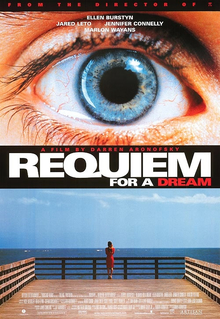
Requiem for a Dream

All I can say about this movie is that it's amazing.

Ok, that's not really all I can say, because the word amazing can be applied to so many things--a sunset, creme brulee, a bad pileup on the highway, passing a class that you thought you'd fail--that a little more explanation is necessary so that you understand how this movie is amazing. Because to call a movie about 3 young people and one old woman who all get hooked on drugs "amazing" does require a little explanation.

I rented Requiem for a Dream because I heard the soundtrack and loved it. It's haunting, it's somber and it stays with you. The same could be said for the movie itself. The images in the film get under your skin and won't let you go, and that's what makes it so powerful.

Director Darren Aronofsky does an incredible job setting up the shots in the movie. One of the most obvious things he does is to shoot from the perspective of the characters, so that the viewer gets caught up in what it means to be addicted. However, in addition to this general technique, he has several specific shots that are just brilliant. One that keeps recurring is a series of quickly flashed images--a pile of powder, a pupil dilating, a rolled-up dollar bill, the inside of the body at the injection site. Each of these images by itself is crystal-clear and beautifully photographed, but when flashed in sequence, they portray the fleetingness of a high off drugs.

Another thing he does to great effect is use split screens when filming two characters interacting with each other. This happens mostly at the beginning, and the most poignant use of it was when he filmed Harry and Marion lying together, telling each other how beautiful and special the other one is. It would be a romantic scene, except we realize that they're so high that the words don't actually mean anything. And Aronofsky does a fantastic job of portraying this by splitting the screen; we see them move into the other's space, but in reality, they're alone, even when together.

The other scene that is just fantastic is the ending sequence, in which it quickly flashes from one character to the next, showing each character's demise. The movement of the scenes suggests a spiral from which there is no escape--a particularly visual representation of the horrors of drug addiction.

In addition to the cinematography, there were several aspects of the plot that made this more than just a movie about the dangers of young kids using drugs. The most significant thing is that the movie parallels Harry's life and his mother's life, and how both of them are caught up in this downward spiral. This adds depth to the movie, and shows how drug addiction comes in many forms, not just needles and powder. Ellen Burstyn does an amazing job as Harry's mother; she definitely deserved the Oscar nomination, if not more.

For me, the most poignant moment of the film came about halfway through. I was a little apprehensive going into it, because the Netflix blurb said "Not for the sqeamish" (which is true, by the way, but really only applies to the end). I was waiting for all sorts of horrible images, and although there had been plenty of drug use, nothing horrible had happened yet. In fact, it looked like Harry and Marion and Tyrone were about the get their life back on track. And then it hit me--this movie is a requiem. It is a lament for the dead. There is no hope for a better life--this film is mourning the passing of the hopes and dreams that these characters have, whether it's the dream to be on television, the dream to be loved by your mother, or the dream to open a clothing shop. These dreams are dead.

The film has an NC-17 rating, primarily, I think, because of a particularly graphic sex scene near the end. But when I have teenagers, I honestly might consider showing them Requiem for a Dream. The most heartbreaking scene comes at the very end, after Marion has just done all sorts of demeaning things to get drugs; she curls up with the drugs and goes to sleep, just like a little child would curl up with a teddy bear. The horror and unbelievable sadness of that image, along with the physical trauma that all the characters go through, will stick with viewers and haunt them, acting as a more effective deterrent to drug use than anything else I can think of.

Rating: 4 stars out of 5

Friday, July 13, 2007

Transformers

I was deprived as a kid, and never really got to watch Saturday morning cartoons (among other things). Ok, so I really think it was probably good for me to not spend the whole day in front of the TV, but I did miss out on some notable cultural icons of the 80s, like the Smurfs, He-Man, and Transformers. My brother did have a Transformer, though, although I don't remember which one it was. I think it might have been a fire truck.

But when my husband said he wanted to go see Transformers in the movie theater, on July 4th, I was excited. Seeing movies with huge special effects in the theater is always pretty cool, and the way the Transformers, um, transformed in the previews looked sweet.

In short, I really liked the movie. I didn't go in with high expectations for plot, dialog, or acting, and I was pleasantly surprised on all three fronts. Yes, the plot is basic action-movie fare, but it's easily understandable, and there aren't many details that fall through the cracks. My only big complaint about the plot was near the end, when the army guys decide to take the battle to a nearby city. It's not clear to me why that move was necessary, except perhaps that smashing big buildings with robots makes for better special effects that simply having robots fight in the desert--clearly a choice motivated purely by plot.

I also thought the dialog was pretty funny. Maybe I was feeling generous that day, but the corny one-liners that the movie delivered struck me as a step up from where they could be. The Autobots in particular (they're the good Transformers) were pretty funny, especially in the scene when they go to Sam Witwicky's house and stomp all over his dad's lawn. This point might be debatable, since my husband didn't find the stupid humor nearly as funny as I did.

And finally, the acting was good, particularly Shia LaBeouf as Sam Witwicky, the teenage guy who gets caught up in the war between the Autobots and the Decepticons because his grandpa discovered the Autospark and Megatron when he explored the North Pole. He did a great job making his character relatable and likeable, nerdy but cool, cute but not like he was trying to be. Megan Fox, who plays the hot girl (I don't even remember what her character's name was supposed to be) was convincing as the hot girl, but her character could have been improved by casting someone in the role who had more than one facial expression. Oh, and I was confused about who the brainy hot chick at the CIA was, particularly why she had such a crazy accent.

Hmm...maybe there are more plot glitches than I initially thought. It didn't really take away from the enjoyment of the movie thought, so it's ok.

The real stars of the movie, though, were the Autobots themselves. They're funny, they're good-looking (all the good robots are hot sports cars or sleek shiny trucks), and they really care about humans. The bad Transformers were cool, too, but you lacked the emotional connection with them. So when one of the Autobots gets hurt, and another looks like he might have to die, you get concerned. You love these robots and the way that they can effortlessly transform between one shape and another. You love that they're willing to give up their own future so that the human race can survive. Even though the movie was long--over 2 hours--I never got bored watching the transformations from machine to robot. It was extremely cool, and a lot of fun.

Rating: 4 stars out of 5

Tuesday, July 10, 2007

Movies again!

Netflix means that I have a constant stream of movies coming in and out of my house...some are good, some are great, and some are just awful...

Speaking of just awful movies, Nacho Libre takes the cake for the worst movie I've seen in a long while. My husband and I started watching it, sat through 15 minutes, and couldn't handle it anymore. If you're idea of a good time is watching Jack Black do a bad Mexican accent and give a lot of intended-to-be-significant glances at things, this movie is for you. But if you're someone who needs a plot, interesting characters, and a movie that moves faster than a snail's pace, you should look elsewhere. Maybe I missed out by not seeing it through to the end, but I doubt it.

Rating: 0 stars out of 5

Syriana is a movie about oil, big business, and world economies. Several story lines twine together throughout the movie, detailing different aspects of the oil story--a young Pakistani worker, a CIA operative, an emir and his two sons who both want to be his heir, a financial analyst, a lawyer investigating an oil company merger. I enjoy this sort of structure in movies--I like seeing how stories that initially don't seem to connect come together in the end. Syriana was less fulfilling than other movies with a similar structure because everything didn't come together in the end. But that was the point of the movie--the lack of a definitive conclusion, and the confusion of what exactly was going on, did a great job of showing how complex the issues were, and how none of the players involved really knew everything that going on either. I thought the way the sound was done was very effective--there was a marked lack of background noise, which added a level of seriousness and made the silent moments even deeper. Overall, it was interesting and very well done, but required too much focus for me to easily enjoy it.

Rating: 3.5 stars out of 5

I remember seeing The Red Violin a few years ago, and I think I liked it then. Rewatching it, I wasn't quite as impressed as I remember. The movie tells the story of this one violin and shows several 20-minute segments on each of its owners. You have the brilliant kid, the sex-crazed virtuoso, the Chinese woman living under Mao. Each of these stories is interesting, but you don't ever get to know any of the characters well enough to really care about them. I do think the structure is cool, though. There's a lot of jumping back and forth, and it quickly becomes clear that this movie is the story of the violin, more than any one character. But while that's a cool concept, it's hard to really feel emotional about the way all of the characters seem to. The last half hour of the movie shows a present-day auction for the violin, with Samuel L. Jackson as an assessor for an auction house. He figures out that this violin is the historical "Red Violin," as well as what makes the varnish red. This part of the movie was much less interesting to me, and I thought that the ending was questionable in its believability.

Rating: 3.5 stars out of 5

If you're looking for a feel-good sports movie, Invincible is not it. This movie tells the story about the Philadelphia Eagles in the 70s, when coach Dick Vermeil held an open tryout to inspire interest in the lousy team. Mark Wahlberg plays Vince Papale, the only guy to make it onto the team through these tryouts. The story is predictable without being heartwarming--you just don't care about the characters. Greg Kinnear does a decent job as Vermeil, but Mark Wahlberg just doesn't seem to have the acting chops to make us feel anything for his character. Vermeil keeps talking about how Papale's the kind of guy who's the soul of a team, but you just never see that sort of passion in him. The other big problem is that Wahlberg is not the right size for a football player. Yeah, we see that he has muscles, but he's just too small. Every time he goes to block anyone, you wonder how it's possible. The cinematography is cool--all the scenes in south Philly are shot in darker sepia tones, while the NFL scenes are in blinding light and color. Pretty cool, but not enough to save the movie.

Rating: 3 stars out of 5

Thursday, July 5, 2007

Next batch of movies...

More movies!

I wasn't sure what to expect from The Constant Gardener; I knew that Rachel Weisz won the Oscar for best supporting actress for her role, but that was about it. Both my husband and I ended up thinking that it was pretty good, but neither of us loved it. I thought the camera work was interesting--a nice parallel between the Quayle's webcam and the actual cinematography of the film--but the home-footage nature of much of it (albeit an imitation of home-shot movies that far surpasses all of them in quality) made it difficult to love. The shift in colors between the scenes in Africa and the scenes in Europe was also notable, particularly because of the marked lack of green in most of the shots of Africa. Quite fitting with the metaphor of Justin Quayle as the gardener, trying to create a perfect, orderly world, and finding it impossible in Africa. Although the movie was billed as a love story, that wasn't what it was really about--it was about something much larger than the two main characters, something that forces the viewer to look at those that society thinks of as disposable and holds us accountable.

Rating: 4 stars out of 5

There were things about The Piano Teacher that I thought were really well done. Isabelle Huppert's performance as Erika, an emotionally distant piano teacher, is amazing. I think she smiles once during the whole movie, and you keep waiting for her to do it again. She does a fantastic job at showing how the tension is building inside her, with the bare minimum of facial expression. I also really appreciated how director Michael Haneke added to the building tension in the movie with his long, slow shots of Erika walking, a door closing, or Erika or Walter (her pupil/love interest played by Benoît Magimel) simply looking at something. It's slowly paced, but always building as a steady crescendo. I also loved the way Erika talks about music, as if it's something personal and significant to everyday life--for her, it absolutely is. But the darker aspects of the movie, particularly the drawn-out (although not visually graphic) sex scenes, were a bit too disturbing for my taste. I realize that they were key in developing Erika's character, but I got the same idea from the understated, yet also horrible scene with her pupil Anna. The shift in focus in the movie from music performance in the first half to sex in the second does draw an interesting parallel between the two, though.

Rating: 3 stars out of 5

Glory Road was almost exactly what I thought it would be. Forget that. It was exactly what I thought it would be. Some of the Southern accents were a bit corny, but the story of Don Haskin (played by Josh Lucas) as a no-name basketball coach in the 60s who takes a bunch of black basketball players to the NCAA championships is a fun, easy-to-digest, heartwarming rags-to-riches story. But therein lies my criticism of the movie as well. It goes down too easy. The viewer sees these black basketball players and wants them to win, because that's what the movie tells us to do. And so when people in the movie act racist, we are outraged, because they're hurting "our" team. But it also makes us think that we aren't like that anymore. The movie ends happily, all the players on the team go on to glorious futures, and everything is ok. (I'm sorry if I spoiled the ending, but c'mon--it's a movie produced by Disney. Surely you could see it coming?) And in writing the ending this way, the movie makes racism in America something of the past, which it so clearly is not. Not every movie has to be Crash, but whitewashing things isn't the way to go either.

Rating: 4 stars out of 5

I didn't read any reviews of The Interpreter before renting it, so I went in completely unbiased. And I really liked it. I was constantly kept guessing by Nicole Kidman's character, who is an interpreter at the U.N. who overhears something she shouldn't. Because it's Nicole Kidman, I trusted her, but Sean Penn's character, who is a secret service agent assigned to protect foreign dignitaries, did not--he kept trying to figure out what she was lying about. For me, this was enough of a hook to keep me interested in the rest of the plot. And Sydney Pollack does a good job of making the viewer flip-flop in what she thinks several times throughout the film. And details keep falling into place at a nice pace throughout the film, which kept me engaged. As far as the cinematography, several scenes were very well-done, the double chase/tailing scene in particular. Also, it was exciting to see the actual inside of the U.N. being used for many key scenes in the movie. I thought the ending scene was weak, although it was a lot less lame than it could have been if Pollack had gone for the stereotypical ending. When I looked up reviews of the film after I watched it, I was really surprised to see that people were so harsh on it--I thought it was very good.

Rating: 4 stars out of 5

Wednesday, July 4, 2007

How Rotten Tomatoes Gets It Wrong

Happy Fourth of July! In honor of our nation's independence, and the sci-fi/action movies that always get released on the 4th (who's going to see Transformers today?), here is today's post:

I like the Rotten Tomatoes website. I think it's a very helpful way to get an initial impression of whether it's worth seeing a movie or not, and the concise excerpts of what the critics are saying is a helpful one-stop-shopping place for the buzz on almost any film.

I do, however, have a bone to pick with them. I think their Top 100 Sci-Fi Movies list is absolute crap. I'll get into why it's so bad in a bit. But first, I should point out that that this is a list of the top-reviewed movies. That is important to keep in mind when viewing the list. They're allegedly not taking into account a movie's influence on the rest of the genre, whether or not the movie is ground-breaking, or its place in sci-fi movie history. They're just looking at the quality of the reviews of individual movies.

Ok, fair enough. But then, if you look at the sidebar explaining "How It Works", you see that there's a complicated process involving mathematical formulas and voting. Voting? Suddenly, the list is no longer about just which movies were best reviewed, but which movies critics thought belonged on this top 100 list.

Since the transparency and objectivity in the list is gone because of the addition of voting, I'm free to critique it all I want. Heh heh.

The biggest bone to pick with the list is the inclusion of movies like Ghostbusters, Men in Black, GalaxyQuest, and Space Balls above movies that have really shaped the genre. These are comedies, wearing a sci-fi costume. Their jokes are all dependant on movies that have gone before them. They wouldn't exist if it weren't for the original movies of Star Trek, Star Wars, etc. Sure, they may be good comedies, but ground-breaking sci-fi films they are NOT. There is no way that GalaxyQuest deserves to be #13 on the list, above truly innovative films such as Bladerunner.

Which brings me to my next point--why is Bladerunner #36 on the list? In my opinion, this is one of the most highly innovative sci-fi films of all time, building the imagery for countless sci-fi films to come. And not only that, but why isn't the 1992 rerelease on the list? Both the original and the remake of Invasions of the Body Snatchers were on the list since both mattered so much; since the original and redone Bladerunner had a similar effect, why not them too? I guess what's really irritating about this example in particular is that Minority Report, another movie based on a Philip K. Dick novel, is ranked #5. The imagery in Minority Report wouldn't have been possible if Bladerunner hadn't already done the same thing twenty years earlier.
(Plus, I don't like Tom Cruise.)

I was also irritated by how harshly they judged The Return of the Jedi. Yes, it's the weakest of the original three Star Wars films, but is it really worse than The Matrix Reloaded? Hardly. And rating Star Trek: The Wrath of Khan below Star Trek: First Contact doesn't make any sense, especially since most ST fans agree that Wrath is the best movie in the franchise. Also, no offense to fans of the movie, but does Eternal Sunshine of the Spotless Mind really deserve the #2 spot on the list? The explanation of the film even admits that the science fiction aspects of the film are more incidental than anything. If that is the case, then give the spot on the list to a movie where the sci-fi focus is what makes the movie great.

I was happy with how much attention was paid to classic sci-fi films, such as The Day the Earth Stood Still and Invasion of the Body Snatchers. I was also pleased to see that Metropolis made the top 3--an acknowledgement that knowing your roots is important. And Star Wars and Empire Strikes Back were both in the top 10, which is also good.

The top-rated film of the list is E.T. I'm not angry about this, although if it were up to me, Bladerunner would probably have the spot, just because of how influential it was in shaping future ideas of what science fiction was. E.T. just seems too soft, too warm-hearted, and not particularly influential on sci-fi films that followed. I think Close Encounters of the Third Kind would have been a much better choice.

Anyways, rant off. Let me know what you think I've gotten wrong :)

Tuesday, June 26, 2007

Recent Netflix rentals

Short notes on movies I've seen recently:

The Illusionist isn't bad. It does a good job of building up to a climax, the magic tricks are cool, and the acting seems pretty good. The biggest problem with this movie is that it was released around the same time as The Prestige, another magic movie that I really enjoyed. The Prestige explained how all the tricks were done; in The Illusionist, most of the tricks you see Edward Norton's character perform are simply left unexplained. And even though I could see the ending of the movie coming, the details of how we got to the ending weren't explained either, which was frustrating to me. Oh, and the accents were weird. Apparently, everyone's idea of an Austrian accent is something completely different.

Rating: 3.5 out of 5 stars

Well, I'm not really sure what to say about Sin City. I loved the way that it was filmed--I thought it was really cool, and I was impressed by how the movie took a lot of comic book clichés and made them new and exciting by putting them onto film. Some of the casting choices were cool, too--Elijah Wood is cast as an incredibly creepy villain, which goes against all your ideas of him as a hobbit and the All-Star shoes he wears in the film. /shudder. But the thing is, it was really violent. And I wasn't really expecting that. I mean, I knew it was dark, but I guess I wasn't expecting the unrelenting stream of very horrible images that assailed me. Maybe I'm just a baby, but I couldn't handle it--I ended up turning off the movie about halfway through.

Rating: 3 stars out of 5

Pride and Prejudice is one of my favorite movies, and one of my favorite overall love stories (see here). Honestly, I'm not normally a Keira Knightley fan (sorry, K.)--I get distracted by her teeth, which I think are pointy and make her look like a vampire. But she does a fantastic job as Elizabeth Bennet, as does Matthew MacFayden as Mr. Darcy, and I'm impressed by their chemistry. But the thing that really makes the movie stunning is the cinematography and the soundtrack. The sweeping shots of the English countryside give the story a drama and seriousness that adds to the passion between Elizabeth and Mr. Darcy. And best of all, the story is true to the novel, and manages to capture the wonderful sense of humor that Jane Austen brings to her novels.

Rating: 5 stars out of 5

My husband and his brothers are huge fans of the movie Supertroopers. And so we've checked out all the other movies done by this comedy group (Broken Lizard), which include their first movie Puddle Cruiser and Club Dread. Puddle Cruiser was rough around the edges, but the talents of Broken Lizard showed through well; Club Dread was just pretty bad across the board. Beerfest is the latest movie put out by this group, and it ranks right up there with Supertroopers. I'm not sure it has the potential for quoting lines that Supertroopers does, but it's very funny, especially when you've been drinking. And the "German" guys are hilarious, no question about it. I think they stole the show.

Rating: 4 stars out of 5

Friday, June 8, 2007

This week's movies

Here are my thoughts on the latest batch of Netflix rentals...

The Queen is a fantastic movie, I thought. Initially, I found it interesting seeing how they got actors who looked like the royals in real life, but as the movie progressed, the actors were so convincing in their roles that I forgot that they weren't actually the real people involved. I honestly think that this film should have gotten an Oscar for costume design, because everything was spot on. The film tells the story of the week between Diana's death and her funeral, and how Queen Elizabeth II and Tony Blair reacted to it and interacted with each other. The film is strongest in its portrayal of the private moments of the royals. The most private of these moments are led up to, with the actual moment itself being left offscreen. This scene set-up is a brilliant way to capture the struggle this family has at being private while living in the public eye. Helen Mirren's performance is reason in itself to watch the movie. From the beginning of the film, where she turns to look at the camera straight-on, she is the Queen. And the scene with the stag near the river is one of the most powerful in the movie.

Rating: 4.5 stars out of 5

The Pursuit of Happyness is another very good movie, but it leaves you feeling very, very tired. The key word in the title is not "Happyness" but rather "Pursuit." If you're looking for a movie that will make you feel warm and fuzzy inside, this is not it. Instead, it's about the grueling struggle that Will Smith's character goes through to provide for himself and his son. They live on such an edge--often surviving day to day--that I found myself feeling tense throughout the entire movie, just waiting for something bad to happen to them that would finish them off. I do think this movie, along with Barbara Ehrenreich's book Nickel and Dimed, should be required viewing/reading for every middle-class and above resident of the US, because both offer an incredibly insightful perspective on why it's so difficult, if not impossible, for those who make minimum wage to get things that we take for granted, such as a place to live, transportation, and an education.

Rating: 4 stars out of 5

The 40-Year-Old Virgin wasn't very good. I think it would have been much better if it were a lot shorter. I saw the unrated version, which is 133 minutes, and even the theatrical release was 116 minutes. For a gimmick-comedy like this one, you can only drag it out so long before it gets boring. The first half of the movie shows Andy (Steve Carell) trying out various ways of dealing with being a virgin; the second half shows his developing relationship with Trish, who doesn't know he's a virgin. The second half was a lot better than the first, because it showed character development on Andy's part, rather than just his friends trying to help him/making fun of him. But I still think they must have forgotten to hire film editors for this one--it would be decent at 90 minutes, but definitely boring at 2 hours.

Rating: 1.5 stars out of 5

Catch and Release looks like a chick flick, and it pretty much is one, but without the feel-good moments of romance. It tells the story of Gray Wheeler (Jennifer Garner) who finds out secrets about her fiancé Grady after he dies and ends up falling for his friend Fritz. Instead of feeling mushy and happy, I just felt slightly concerned for Fritz and Gray's budding relationship, since she seemed to be hardcore on the rebound and they never did anything but have sex. Not that there's anything wrong with sex, but to believe the relationship, there should be a bit more, you know? Also, there were too many subplots squeezed into the movie, some only developed by monosyllables between two of Grady's male friends. I love Jennifer Garner and all (and Kevin Smith is occasionally funny in a supporting role), but her dimples and charm can only carry a poorly written movie so far.

Rating: 2.5 stars out of 5

Thursday, June 7, 2007

Yo ho, haul together, hoist the colors high!

Normally, I'm too cheap to go to the movies in theaters, unless it's something both my husband and I are really dying to see and that we think would be better in the theater. Lord of the Rings, for example, made the cut. I can think of 3 or 4 movies since then that have.

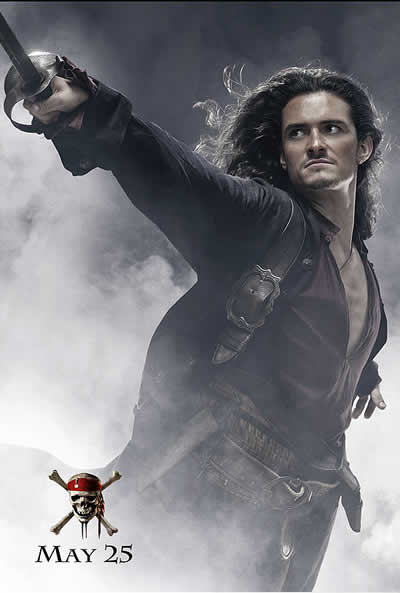
Pirates of the Caribbean: At World's End was not a movie I was planning to go see in the theater. I thought the first one was ok, and sort of muddled my way through 2/3 of the 2nd one. I remember something about a swordfight on a giant wooden wheel, but other than that, I was pretty confused. I was also made wary by many reviewers who dismissed the movie as more summer blockbuster fare: Rotten Tomatoes gives it 47% on the tomatometer, making it a rotten tomato.

But my friend K. asked me to go, and so I thought, "What the heck? I do like movie popcorn." And, even though the movie was quite long (168 minutes), I was pleasantly surprised to find that I enjoyed it.

That's not to say that the movie didn't have its problems. It reminded me quite a bit of the third Matrix movie in terms of plot--you really had to have taken notes during the first two movies for the third to make any sense. People coming back from the dead, special pirate laws, complicated relationships whose explanation was in a previous movie, multiple switching of allegiances--it was all there. The first big fight scene in Singapore really summed up the movie quite nicely: three groups of people are all fighting, and you have no idea why they're fighting or who's on what side. I asked a few clarifying questions, but after a while, gave up to enjoy what the movie does well.

We'll get to that in a minute, but for now, my only other big issue with the movie is the way the Elizabeth/Will relationship is handled. Yes, I know it's supposed to be an action movie and the focus isn't on romance, but if the movie is going to pretend that their relationship is complex and deep, then it needs to follow through on that. Throughout the movie, they talk about how they have issues with trust, but none of those issues are resolved before the relationship is solidified (in a completely ridiculous scene, by the way...undermined a lot of the nice things I was thinking about the movie at the time). And quite frankly, the ending made me mad and seemed like a lousy, unfair-to-the-viewer way to get Will out of the decision-making jam that he's stuck in.

These plot/relationship points aside, the movie does a lot of things very, very well, the biggest being the special effects and cinematography. Even though the movie presents a lot of ridiculous things--ships coming out of the ocean, guys with fish heads, monstrous maelstroms in the middle of the ocean--it's all completely believable within the realm of the movie because these special effects are woven seamlessly into the film. The cinematography is also really amazing. There are a lot of shots of wide expanses of ocean that are, well, inspiring. The swordfight scenes are spectacular, particularly the one between Davy Jones and Captain Sparrow. And near the end of the movie, there is a scene involving Lord Cutler Beckett that's artistic and moving and almost makes you feel sorry for him.

The soundtrack does a lot to heighten the effects of the cinematography. In one scene where Elizabeth, Barbarossa, and Jack Sparrow are all walking across a sandbar to meet with the "enemy" leaders, the camera pans out and the music crescendos, making an overlong, boring walk into an extremely dramatic buildup.

But perhaps the best reason to watch Pirates of the Caribbean: At World's End is Johnny Depp's portrayal of Captain Jack Sparrow. I know a lot has been written about what a great job he does, and how no one else could really pull off the role convincingly, but it bears repeating here, particularly because in this third installment, we see Sparrow interacting with his hallucinations of himself. Depp interacting with Depp is very well done, and quite hilarious. Keith Richards is also great in a small cameo as Sparrow's dad, and especially funny because Depp has cited him as inspiration for his performance as Sparrow.

So yes, the critics are right--Pirates of the Caribbean: At World's End is traditional summer blockbuster fare, light on the plot and character development and heavy on the action sequences and special effects. But it does those things very well, and that makes it worth watching, especially in the theater, where you will get the full effect.

Rating: 3.5 stars out of 5

Thursday, May 31, 2007

This week's movies

Here's the post that I intended to write yesterday, but didn't because of the rabid mosquitoes in the Minnesota northwoods.

Quick notes on the movies that I've watched this past week:

Talladega Nights wasn't as funny as it could have been. I think that for the most part, Will Ferrell wasn't the funny one in the movie--it was everyone around him that made me laugh. I especially liked the kids, Walker and Texas Ranger, and how they reformed under "Granny Law." They were humorously disturbing when they were foul-mouthed, but absolutely hysterical when they were doing tai chi with their grandmother.

Rating: 2 stars out of 5

Happy Feet was pretty bad, to be honest. Its biggest problem is that it couldn't decide what it wanted to be. A musical? A movie to inspire environmentalism? A movie about being yourself, no matter what the cost? It bounced from one to the other, leaving gaps where you thought, "But I thought this movie was about..." I also wasn't really impressed with the music. While the songs in the Disney movies usually forward the plot, the songs in Happy Feet were pop songs, often jumbled together. They didn't do a whole lot for me. The exile scene was also really very heavy, and came across sounding preachy. But I did really like the little Latino penguins; they made me laugh quite a bit, as did the humans dancing at the end.

Rating: 2 stars out of 5

Pan's Labyrinth is the best movie that I've seen in a long time. The special effects were integrated seamlessly into the movie, the lighting shifted in amazing ways, based on what was happening (I really want to go back and watch it more closely to see exactly how this is done), and the juxtaposition of a fantasy story against the horrors of war was an incredibly poignant way to highlight the different worldviews of the different characters. Ivana Baquero, who plays Ofelia, does a fabulous job, but the movie is so incredible because each of the main characters creates a person that is believable, and, even at times for the Captain, sympathetic. I absolutely loved it and think it is a great contribution to the genre of fantasy literature and film.

Rating: 5+ stars out of 5

Love Actually came out a while ago, but I recently rewatched it. Yes, it fits into the genre of chick flick, but the interwoven story lines makes it a more interesting movie than most. I really enjoy movies where seemingly separate plots somehow come together, or are at least peripherally connected. I also think that the movie does a pretty good job of showing many aspects of love--including love with the possibility of betrayal and love of someone who has died--in a more honest way than many romantic comedies.

Rating: 4 stars out of 5

And as a side note...I'm a little crabby with Netflix right now, to be honest. I loved their service when it first came out. We took a break from our subscription to play World of Warcraft, and we just recently renewed it. But now that all the disks aren't brand new, I've been noticing a LOT more performance issues on the DVDs we've rented. Since we renewed our subscription (about 2 weeks), I've had 2 movies that hang up so badly I can't understand the dialogue, and one of them even needed to skip the chapter before the movie would continue playing. I know that I can send the movie back and get a different copy, but that doesn't do anything for me when I want to see the last 15 minutes of Love Actually right now.

/sigh. Here's hoping Netflix works harder in the future to screen movies that are becoming unplayable.

Tuesday, May 22, 2007

Jerry Seinfeld, Giant Bug?

It has been interesting to see what the former Seinfeld actors have done after the end of that show. For the most part, they haven't done much that's been successful. Jason Alexander--George--tried starring in a show called Bob Patterson, where he plays a motivational speaker. Michael Richards--Kramer--starred in The Michael Richards Show which only lasted one season, and then, when returning to stand-up comedy, received some pretty bad publicity about racist remarks he made. Julia Louis-Dreyfus--Elaine--has been more successful. Her first attempt post-Seinfeld, Watching Ellie, didn't do well, but her latest sitcom, The New Adventures of Old Christine, has been met with both critical success and good ratings.

Jerry has kept a slightly lower profile, as he hasn't starred in a television show since the end of Seinfeld. He has done a few commercials, a few guest appearances on talk shows, and mostly, returned to doing stand-up.

It appears that lower profile is about to change. Jerry has written and is voicing the main character in the animated Bee Movie, a story of a bee who finds out that humans have been stealing honey from bees and decides to take legal action. It's seems like a good enough idea, although slightly unoriginal at this point--A Bug's Life (which had Julia Louis-Dreyfuss doing one of the voices, incidentally), Antz, and The Ant Bully have all done the "animated bug movie" already, and for the most part, done a good job. It will be interesting to see whether Seinfeld's Bee Movie will bring anything innovative to the mix.

I do however, seriously question Jerry Seinfeld's choice of promotional strategy for the movie. At the Cannes Film Festival, Jerry descended from the top of a building to the street dressed in a giant bee costume. Look at the expression on his face. He's thinking, "Boy do I feel stupid." And the thing is, he's right. He looks like a giant balloon on Thanksgiving in the Macy's parade. When I see this picture, I don't want to go see his movie; I wonder who his publicist is and why he still has a job.

Some comedians might be able to pull something like this off--comedians who are more happy-go-lucky or more into physical comedy. Jim Carrey, for example, strikes me as someone that could get away with doing something like this without looking like an idiot.

The thing is, Seinfeld seems to know that he looked stupid. Before he jumped, he said, "You know, one thing I hate is any kind of movie promotion that smacks of desperation in any way." Obviously, he's aware that what he's doing looks dumb. The question then becomes, "Why did he still do it?"

At any rate, I think Jerry Seinfeld should work harder to live by this rule of thumb: If it's something George or Kramer would think is a good idea, don't do it.

Monday, May 21, 2007

It's time for a change

Normally, I try to keep this blog fairly light-hearted, sometimes even silly. I know there's enough in the news every day that's depressing, and I would rather be a bright spot in someone's day than a downer. But a friend of mine recently brought this story to my attention and asked me to blog about it, and given the importance of the subject, I was happy to oblige.

Last month, a Kurdish teenage woman named Dua Khalil was beaten to death in what is often called an "honor killing." According to CNN, Khalil's religion is Yahzdi, and she was in the company of a Sunni Muslim man. Her relatives thought she may have married this man, or converted--either of which is against Yahzdi teaching--and because of this, they beat her to death.

To me, the most horrifying part of the story is what comes next. There were several people there who were merely watching, and who filmed the entire attack and murder on their cell phones. You can see the video on the CNN site; I'll be honest--I didn't watch it, and I have no desire to.

When hearing this story, it's easy to think, "But that's not our culture. We don't do that in the United States. I would never do anything like that." And yes, it is likely that most of us will never participate in an honor killing in our lives. But what about the statistics that 1 out of every 6 women will be sexually assaulted in her lifetime? Violence against women--particularly sexual violence--does happen in the United States, and all too often, it is unreported and unpunished.

And what about the other aspect of the story--the standing by and watching it, even viewing it as entertainment? It's harder to brush that off, particularly when there are movies out there like Captivity, starring Elisha Cuthbert, which puts forth her gruesome torture as entertainment, meant for the American public's viewing pleasure. In this case, how is the group of men who filmed Khalil's murder different from those who filmed Captivity? While one is fact and one is fiction, it's a very thin line between the two, particularly when both demonstrate the same mindset that viewing the torture of those weaker and different from you can be entertainment.

So I'm asking those of you who read this to work for a change. Violence against women was the impetus for writing, but this certainly extends to violence against others who are persecuted because they are different, whether because of their sexuality, religion, race, or other quality that sets them apart. Start small--challenge those who degrade or mock, even in fun, those who are different. Choose to not see movies that glorify sexual violence, and don't be afraid to say why you're not going. What you say does make a difference--protests to the MPAA got a series of graphic ads for Captivity pulled off billboards. Even small actions like these can help challenge the mindset that the torture, persecution and mockery of those who are different is an acceptable part of life.

Don't be the one who sits there, watching, filming, and condoning, while Dua Khalil is beaten to death. It's time for a change.

Wednesday, May 9, 2007

Harry Potter and the Order of the Phoenix

It's pretty much a given that anything as successful as the Harry Potter books will have movies made out of them. And, for books 1 and 2, those movies are pretty good. The books are simple and straightforward enough that most of the important plot points can be included without the movie getting out of control.

The third movie--Harry Potter and the Prisoner of Azkaban--was pretty good, for the most part, and did a really good job of capturing the darker mood of the book. I harbor a slight grudge against the movie, mostly because it left out the part of the book that always brings tears to my eyes (the part where Dumbledore tells Harry, "Prongs rode again last night."), but overall, the movie stays very true to the book.

Movie number four--Harry Potter and the Goblet of Fire--was faced with the enormous challenge of fitting so many different events into one book. The Quidditch World Cup, the Triwizard Tournament, and Voldemort's return being the three biggest ones. Add to this the extreme shifts in the book from excitement and youthful exuberance to sheer terror and overwhelming responsibility, and you have a near-impossible movie to make. And to be honest, it showed. Many of the individual scenes were done quite well with very cool special effects, but the movie lacked continuity and flow. I felt as if I were watching several different stories that had all stumbled into the same theater and couldn't find anything in common except their characters all have wands.

Given these problems in the fourth movie, I was a little concerned about movie number 5--Harry Potter and the Order of the Phoenix. That book is as long as Goblet of Fire, and it seems that since a little bit gets left out every movie, having things make sense in the later movies is going to be difficult.

But, after viewing the trailer for the movie, I have hope:


The trailer presents a movie that is consistently dark, even during scenes like Harry and Cho's kiss. Lots of swirling smoke, lots of darkness around the edges of scenes, lots of half-lit characters' faces. And, especially for this movie, I think that if director David Yates is able to capture the edginess and near-constant feeling of imminent death--which the trailer suggests that he will--it will convey the overall message of the book.

The other thing that gave me hope as I viewed the trailer was that I realized that I remember the books much better than I remember the movies. I honestly don't remember the specific details that were left out of Goblet of Fire. Yes, there are certainly people who have never read the books and just see the movies, but the majority of the rabid Harry Potter fans are ones who have devoured the books and reread them multiple times. The details of the books will stick with them, and give the movie series continuity, even if certain details get left out of individual movies. Not something that movie makes can usually rely on, but in this case, particularly given the huge number of details in the books, it can work as a handy shortcut for more manageable movies.

Harry Potter and the Order of the Phoenix is released nationwide on July 13, 2007.

Tuesday, April 17, 2007

Children of Men

My delightful husband recently discovered the magic of Ebay. I mean, he always knew it existed, but he just connected to it on a personal level. Sort of like being born again. His new philosophy: Why rent a movie when you can bid on it for only $1?

Which is why we now own the charming Clives Owens/Julianne Moore film Children of Men.

I'm using the term charming very loosely.

It was suspenseful, the lighting and costumes did a great job a creating an awful-looking place, and I got drawn into the story. Oh, and Kee (one of the female leads) has a killer sense of humor. The whole thing is almost worth watching just for several cracks that she makes.

But when the movie ended, I was left with a lot of questions.

Spoilers follow...don't read if you don't want to know...

For example: What happened to the world? Why is Britain a haven for refugees? Apparently it has something to do with everyone being infertile, but I never caught a clear explanation.

Also, what's the relationship between all these characters? Who the heck is Jasper? What's the deal with his wife? Are they Theo's parents? Why did Theo and Julian break up? Is it because of Dylan? Some details--like the pingpong ball bit between Theo and Julian--hint at well-developed characters, but fleshed out relationships would help even more.

I realize that information like this isn't really necessary for the furthering of the plot, but I think it would be helpful stuff to know, especially in framing the situation of Theo (Clive Owens) and Julian (Julianne Moore).

Another irritation (not so much a question) is that several key plot points are glossed over in hushed voices speaking rapidly in British accents. The whole after-hours boss meeting at the Fish headquarters that Theo overhears was completely unintelligible to me. Not cool, especially since it sets up the motivation for the rest of the film.

I also think there are several loose ends that they filmmakers could have done more with. Throughout the film, Theo is shown as having a certain appeal to animals, so much so that it seems like it will be significant. So, you start paying attention to the animals. Are they leading Theo somewhere? Are they going to betray him? And then....nothing. By following through on things like this, the movie could have been made richer.

But, my biggest beef with the movie is this: Why can't humanity reproduce anymore? It's the question that we're teased with throughout the entire movie, with hints that the mysterious Human Project will be able to provide an answer. And when Kee gets on the Human Project ship at the end of the movie, we think "finally! we'll get some answers!" Nope. No clue. No idea whether Kee's baby is a fluke, whether there will be more children, or whether Theo, Julian, and countless others have died in vain. Children of Men has set itself up to be a powerful social critique of something, but even at the end, I'm not sure what that is. Certain things--the Abu Ghraib hoods, the clippings against Iraq, the refugee situation, etc., indirectly critique the current US administration, but that critique could have been made much stronger and more interesting if we had gotten some clue at the end of the movie as to why this all was going on. By avoiding the question altogether, the movie doesn't risk looking trite or cliche, but by not taking any risks, it also loses the chance at really saying something.

Friday, February 23, 2007

Three Fun Movies

One advantage of your brother-in-law and sister-in-law living close by is that their Netflix subscription = your Netflix subscription. Ok, not really...but this last month, I have been able to see 3 movies that I wanted to see, all compliments of someone else's Netflix. Thanks guys :)

First up, Accepted--

Yes, this is a dumb movie. And the ending is completely implausible. But overall, it was a lot of fun, and it was a lot funnier than it could have been. In fact, it was a lot funnier than most of these "coming-of-age" teenage films. And it didn't rely on a lot of sex for its appeal, either. Yes, there is a funny scene with a guy in a hot dog costume yelling "Ask me about my weiner!" which still cracks me up, but that's hardly sex. I guess I was just pleasantly surprised how unlike American Pie this was.

One thing that did disappoint me a little was Lewis Black, who plays the dean of the fake university. I thought he was going to be acting, and I was interested in seeing how he did. Well, he didn't act--his character was himself, just with a different name. Don't get me wrong; I think Lewis Black is freaking hilarious, and he has some wonderful things to say about the state of Wisconsin. But I was interested to see him act, which he didn't do.

Next up--The Devil Wears Prada...

Well, this movie was cute and fun mostly because of the clothes, and the thought that "wow, it would be awesome to have that job." Meryl Streep's character was great--I don't think she deserves the Oscar, but I really enjoyed her character and think she did a good job with it.

Anne Hathaway's character, however, REALLY pissed me off. Her boyfriend's assessment of her was totally correct; she kept whining about how she was stuck in this job and didn't have a choice, but she needed to own up to the fact that she did have a choice, and had chosen to do the job. I guess what frustrated me the most was the implication that she couldn't do the job well and stay true to herself. I don't think there would have been anything wrong with her telling her boyfriend "I really enjoy doing this tough job well," wearing fashionable clothes to work, and working her ass off, while at the same time, continuing to eat grilled cheese, wearing jeans at home, and fine-tuning her journalism skills. And I was completely irritated that she went from a 6 to a 4--what the HELL kind of message does that send to young girls watching that? That in order to be fashionable, you have to lose weight, even if you're not fat to begin with? For a movie, especially one that supposedly pokes fun at the fashion industry, that's a lousy message to send.

In spite of her character, however, it was a fun movie...and I really loved the Harry Potter scene :)

Last up....Little Miss Sunshine...

I'm not going to say a lot about this movie, except that I really enjoyed it, and I think you all should see it if you hadn't already. Greg Kinnear does a fabulous job, and brings humanity to a character that you really would want to smack upside the head if it weren't for Kinnear's performance. I did find it a little difficult to think of Steve Carrell as someone other than Michael Scott from The Office (speaking of which, Pam and Roy broke up! Woot!), but his character cracked me up. And I loved the relationship between the grandfather and Olive; it definitely had the potential to be weird, but it ended up just being very sweet and poignant. And at the end, hilarious.

And even though Jennifer Hudson will probably get it, I would really like to see Abigail Breslin win the Oscar.

Wednesday, February 7, 2007

A Detective Movie

Last March, a friend mentioned going to see the movie Brick and how excited he was about it, and then I promptly forgot all about it. Then, a few weeks ago, I was over at some friends' house, and they asked if we wanted to watch it. I vaguely remembered having heard of it before, but couldn't place where. After the first 10 minutes of the film, I wasn't convinced. The dialogue was really fast, I had no idea what anyone was talking about, and the star of the film was Joseph Gordon-Levitt, for pete's sake. I mean, this was the kid who starred in Third Rock from the Sun and 10 Things I Hate About You.

But then, I started to get into it. I loved the cinematography, which is noticeably minimalist in a film-noir style. The focus on the smoke from a single cigarette or the lack of extras populating the set creates a quiet brooding that underlies the tension of the plot.

And then, I realized that even though I didn't understand what was going on, that was the point. Brendan (Gordon-Levitt's character) doesn't know what's going on either, and the movie is a way for both him and the viewer to figure things out.

I think it helps that I enjoy traditional film noir to begin with. This film hints back to The Maltese Falcon; at one point, Brendan asks Laura to honk the horn four times--long, short, long, short--which is the same as the doorbell signal that Sam Spade gives Brigid O'Shaughnessey in The Maltese Falcon. And the fact that Brick takes the cinematography, dialogue, and plot of a traditional film noir and transports it to a high school in 2005 is, in my opinion, a stroke of genius. There are a few times when Rian Johnson really takes advantage of this and self-reflexively pokes fun at the movie, such as the scene where Brendan sits in the drug-kingpin's mother's kitchen, drinking orange juice next to a ceramic rooster. Excellent.

So, if you have the patience to get into it, this movie is well worth watching. The cinematography is beautiful, the plot is interesting, and the acting is well-done. I was particularly impressed with how different Gordon-Levitt was from everything else I'd seen him in. And leaving several situations ambiguous at the end was the perfect way to end the film, leaving me still thinking about what exactly happened.

Friday, January 26, 2007

Remember, remember, the fifth of November...

I know that V for Vendetta has been out on DVD for a while now, but we just got it at our house, giving me the chance to watch it again. I think it's a brilliant film, with both Natalie Portman and Hugo Weaving turning in fantastic performances. Special credit should go to Weaving who manages to convey amazing depth of emotion from behind a mask.

For those of you who haven't seen the movie, I would suggest skipping the rest of this post, as it contains spoilers, watching the movie, and then coming back and reading the rest.

As I watched the movie for a second time, I was able to concentrate much more on the political significance of what was being said, rather than on my concern for Evey and my curiosity about V himself. And as I watched, I was struck by a number of things:

First, V is described by the media as a terrorist, yet the viewer sides with him when watching the film. Why? Because we see the person behind the label; we see a person who has been scarred and nearly killed by an oppressive government, and we think he is justified in doing what he's doing. If we think about the word "terrorist" in our society today, so often we don't think of "terrorists" as anything but that, often applying that same label to anyone who even just looks like them or shares their faith. This is hardly fair. Our ability to empathize with V should suggest a similar possibility with those labeled "terrorists" in our world, and offers a solution to our conflicts based on mutual understanding, rather than bloodshed and war.

My second point is perhaps more controversial, but I mean no disrespect by it. Rather, I just want to point out how V for Vendetta encourages the viewer to see the other side of 9/11, the side that would claim that the attacks on the World Trade Center and the Pentagon were completely justified, and were done to upset an unfair balance of power in the world. When Evey wakes up at V's mansion after passing out in distress, she asks him, "You really think that blowing up Parliament is going to make this country a better place?"

After a bit of conversation, V replies, "The building is a symbol, as is the act of destroying it. Symbols are given power by people; alone, a symbol is meaningless, but with enough people, blowing up a building can change the world."

When we think about the blowing up of Parliament in the movie, such a statement seems completely logical and justifiable. But what happens when we think about such a statement in the context of the United States? Now, I in no way want to say that the bombings of 9/11 were justifiable; the loss of life was horrific. Rather, I just want to suggest that our ability to understand V's perspective in V for Vendetta offers us a unique opportunity to consider the other side of the 9/11 bombings, and once again, offers us a possibility for understanding, rather than hate and war.

Finally, while the obvious heroes of the movie are V and Evey, and to a lesser degree, Inspector Finch, I would like to point out that without the act of one soldier, all their efforts would have been in vain. At the end of the movie, when thousands of people are marching on Trafalgar Square dressed in masks and capes, the army has been given the order to shoot them. In a scene the brings a lump to my throat every time I watch it, the ranking officer orders the troops, "Stand down!" thus allowing the crowd to march forward and preventing the loss of thousands of lives. In my estimation, this one soldier is the unsung hero of this movie, the man who truly made V's vision a reality. This is the kind of heroism that our country needs, even more than V's. Not large grandiose gestures like blowing up a building, but one person, defying the wishes of the government and standing up for what he believes is right.

So when you hear the 1812 Overture, "remember, remember, the 5th of November..."