I grew up in the great state of Wisconsin, home of the Green Bay Packers, cheese curds, and unbelievably lenient liquor laws. Did you know that in Wisconsin, you can order alcohol in a restaurant at any age, as long as a parent or guardian is with you? When I worked as a waitress, the bartenders told me about this father and his 12 year old daughter who would come in on Sunday mornings and drink Bloody Marys. Slightly disturbing, but legal.
I was also used to liquor stores being open after noon on Sunday, and most grocery stores having a liquor annex, where you could buy any sort of alcohol you wanted, from tequila to Zima to a nice Cabernet.
So when I moved to Minnesota, I was in for a bit of a shock. No alcohol in restaurants for anyone under 21, period. No liquor stores open on Sundays. And, perhaps most inconvenient, the only alcohol sold in grocery stores has an alcohol content of 3.2% or lower.
These days, certain groups are pushing to pass legislation that would legalize the sale of wine in Minnesota grocery stores. A group named Minnesota Smart opposes this legislation; every time I go to the liquor store, I see the Minnesota Smart poster that says the following:
9 out of 10 Minnesotans agree that increased exposure of children to alcohol is a bad idea.
Now, let's set aside for a minute the fact that I would like to see wine in grocery stores, and that I'm not necessarily sure that treating alcohol as some sort of forbidden thing only for adults is the best way to teach children about alcohol. I honestly haven't looked at both sides of the Minnesota-wine-in-grocery-stores debate, and so I'm not really in a good position to judge the validity of Minnesota Smart's overall position.
What I AM in a position to judge is the ridiculous transparency of this ad. Who do they think they're kidding? If this sign were at a school, or a community center, it would be believable. But you put it up at a liquor store and expect me to believe that the real reason you oppose this legislation is for the sake of the children? C'mon folks, I'm not that dumb.
It's clear that the real reason that liquor stores are concerned about this proposed legislation is that they don't want their profits to fall. And that could be a perfectly reasonable argument in and of itself--"Don't vote for this because it will put a lot of small stores out of business and move the money to the hands of big box grocery stores." But instead, they choose the overly paternalistic, patronizing approach of appealing to our sentimental morality.
And the real kicker is, this liquor store that I frequent is less than 100 yards away from the grocery store. It's in the middle of an outdoor shopping center, and right next to a large condo/apartment complex. Kids walk past it all the time. It's clear that this store plays up the convenience of people doing their grocery and liquor shopping at the same time. And yet, this is the very thing that they choose to play up in their ads against this legislation.
It's such a disingenuous, transparent approach that if the issue shows up on the ballot, I'm tempted to vote for it, just because I'm angry at being taken for such an idiot. And because a glass of wine with dinner does sound like a good thing.
Showing posts with label politics. Show all posts
Showing posts with label politics. Show all posts
Monday, October 22, 2007
Monday, October 15, 2007
Blog Action Day
Today is Blog Action Day, which is the day where lots of bloggers write on one subject in an attempt to really raise consciousness about a certain issue. This year's issue is the environment, which works out pretty well for me, since I was thinking of writing a post like this anyways.
 On Friday, Al Gore was awarded the Nobel Peace Prize jointly with the Intergovernmental Panel on Climate Change. Reading comments about this award are interesting. About half the articles/posts/etc. that I've read discuss the implications of this for Gore's political career: will he run for President? if not, which Democratic candidate will he endorse? Is Hillary Clinton "green" enough for Gore to support?
The other half of the comments I've read are Gore-bashing comments, suggesting that, for any number of reasons, Gore doesn't deserve the award. Among the most-cited reason is that global warming isn't a problem, and that this is all a liberal European, anti-American conspiracy to try to influence American politics.
Honestly, I have a hard time understanding the reasoning behind rejecting global warming as valid. And I'm not just saying this to make a rhetorical point, or to criticize those who think this way--it's just that I legitimately do not understand why so many people are so invested in rejecting the idea of global warming.
For me, my reasons for not understanding go something like this:
It seems that there are two possibilities--either global warming is a problem, or it's not. If global warming isn't a problem, and we work to change it, nothing enormously bad will happen. If global warming is a problem, and we don't work to change, the consequences will be devastating. In other words, the cost of being wrong about global warming is much more significant if you don't act to fix global warming. It's sort of like Pascal's Wager, but about the environment, rather than God.
Now, some people say that working to stop global warming will hurt the economy, because we will be stunting the growth of big businesses, and that limiting the use of fossil fuels will really slow the economy down. Oh, and individual households will be hurt because they'll be spending more on things like eco-friendly cars, appliances, and food. I can understand this objection in the short term, I guess, but honestly, in the long term, going green seems like it's a huge economic benefit.
To start on the individual level...
Yes, replacing appliances with more energy efficient ones will have a large initial start-up cost, but once you do, you'll save lots of money monthly. Turning down the furnace or air conditioner will again use less energy, and in the winter, a slightly cooler house will give you a good excuse to snuggle up to your significant other! My husband and I ride the bus, instead of driving and parking when we go to work, so we're able to own one car and avoid the ridiculous gas prices and parking rates. The compact fluorescent light bulbs are more expensive than incandescent, but they use less energy and last longer, again saving money (plus, a lot of stores offer pretty hefty rebates for those things). Buying local produce that's in season is more energy-efficient than buying imported fruits or vegetables, and it's usually fresher, better-tasting, and cheaper. I could keep going, but from my experience, there are a lot of things that you can do to "go green" that are not only relatively easy to do, but will save you pretty significant money in the long run.
For corporations, the initial cost of going green is perhaps more significant, but the potential for future innovation and cost-savings is endless. There is forever the complaint that so many American jobs are getting outsourced, that the US can't compete against powers like China, and that the US economy is becoming too service-based, rather than production-based. Well, here's our big chance! There is seemingly endless potential for US companies to develop greener products and processes--energy sources, cars, air filters, etc. Not only could developing these products and processes lead to overall lowered energy consumption, but it could give the economy the kick-start it needs by making the US a cutting-edge innovator in the area of clean technology.
I guess to me, the fight against global warming is also a fight against unnecessary consumption and waste. Releasing less crap into the air and water will always seem better to me, even if it has nothing to do with global warming. Clean air, clean water, and a stable climate seem like things that should be desirable to everyone, which is why I have such a big problem understanding why so many people are so resistant to even considering the fact that people like Al Gore might be right.
I, for one, do think that he's right. I think that his consistent stance on the environment for the last several decades shows that this is not some political agenda, but rather, a deep, impassioned belief in working to make the world a better place. So, congratulations Mr. Gore. And thank you for making the environment a key issue in this next presidential election, even without your participation.
 On Friday, Al Gore was awarded the Nobel Peace Prize jointly with the Intergovernmental Panel on Climate Change. Reading comments about this award are interesting. About half the articles/posts/etc. that I've read discuss the implications of this for Gore's political career: will he run for President? if not, which Democratic candidate will he endorse? Is Hillary Clinton "green" enough for Gore to support?
The other half of the comments I've read are Gore-bashing comments, suggesting that, for any number of reasons, Gore doesn't deserve the award. Among the most-cited reason is that global warming isn't a problem, and that this is all a liberal European, anti-American conspiracy to try to influence American politics.
Honestly, I have a hard time understanding the reasoning behind rejecting global warming as valid. And I'm not just saying this to make a rhetorical point, or to criticize those who think this way--it's just that I legitimately do not understand why so many people are so invested in rejecting the idea of global warming.
For me, my reasons for not understanding go something like this:
It seems that there are two possibilities--either global warming is a problem, or it's not. If global warming isn't a problem, and we work to change it, nothing enormously bad will happen. If global warming is a problem, and we don't work to change, the consequences will be devastating. In other words, the cost of being wrong about global warming is much more significant if you don't act to fix global warming. It's sort of like Pascal's Wager, but about the environment, rather than God.
Now, some people say that working to stop global warming will hurt the economy, because we will be stunting the growth of big businesses, and that limiting the use of fossil fuels will really slow the economy down. Oh, and individual households will be hurt because they'll be spending more on things like eco-friendly cars, appliances, and food. I can understand this objection in the short term, I guess, but honestly, in the long term, going green seems like it's a huge economic benefit.
To start on the individual level...
Yes, replacing appliances with more energy efficient ones will have a large initial start-up cost, but once you do, you'll save lots of money monthly. Turning down the furnace or air conditioner will again use less energy, and in the winter, a slightly cooler house will give you a good excuse to snuggle up to your significant other! My husband and I ride the bus, instead of driving and parking when we go to work, so we're able to own one car and avoid the ridiculous gas prices and parking rates. The compact fluorescent light bulbs are more expensive than incandescent, but they use less energy and last longer, again saving money (plus, a lot of stores offer pretty hefty rebates for those things). Buying local produce that's in season is more energy-efficient than buying imported fruits or vegetables, and it's usually fresher, better-tasting, and cheaper. I could keep going, but from my experience, there are a lot of things that you can do to "go green" that are not only relatively easy to do, but will save you pretty significant money in the long run.
For corporations, the initial cost of going green is perhaps more significant, but the potential for future innovation and cost-savings is endless. There is forever the complaint that so many American jobs are getting outsourced, that the US can't compete against powers like China, and that the US economy is becoming too service-based, rather than production-based. Well, here's our big chance! There is seemingly endless potential for US companies to develop greener products and processes--energy sources, cars, air filters, etc. Not only could developing these products and processes lead to overall lowered energy consumption, but it could give the economy the kick-start it needs by making the US a cutting-edge innovator in the area of clean technology.
I guess to me, the fight against global warming is also a fight against unnecessary consumption and waste. Releasing less crap into the air and water will always seem better to me, even if it has nothing to do with global warming. Clean air, clean water, and a stable climate seem like things that should be desirable to everyone, which is why I have such a big problem understanding why so many people are so resistant to even considering the fact that people like Al Gore might be right.
I, for one, do think that he's right. I think that his consistent stance on the environment for the last several decades shows that this is not some political agenda, but rather, a deep, impassioned belief in working to make the world a better place. So, congratulations Mr. Gore. And thank you for making the environment a key issue in this next presidential election, even without your participation.
Friday, June 29, 2007
We Stand With Him

Tiananmen Square, June 5, 1989 (photo by Jeff Widener)
In one of the rooms in my high school, there was a poster with a sketch of this image of Tiananmen Sqaure, with the words "We Stand With Him" underneath it. Every time I had a class in that room, I would look at that poster, and want to be that lone man against the tanks.
I didn't know who that man was, or what he was protesting. I didn't know that it portrayed the Tiananmen Square protests, and even if I had, I wouldn't have known where Tiananmen Square was. My history classes never got much past 1940, and there was then the mad dash through 6 decades in the last two weeks of school, most of which was spent watching Forrest Gump. No, I'm not kidding. That's honestly how we learned about the 60s and 70s for the AP US History test.
But even though I didn't know what the poster was about, it inspired in me a greater sense of civic duty and pride than any American flag or yellow ribbon on an SUV ever has. Here was someone who was willing to stand up for what he believed in, even though it would most likely cost him his life. He had found something that was worth dying for, and he had made his choice with more than just words or empty promises--he was laying his physical body on the line.
Now I know more about these protests. Students gathered to mourn the death of former Secretary General Hu Yaobang, a Chinese government official whose views in favor of reform made him the perfect rallying point for those who were looking for a more liberal, democratic China. Hundreds of thousands of students marched on Tiananmen Square throughout April and May, often joined by professors and urban workers, who were concerned with inflation and corruption. A hunger strike of at least 1000 students was enacted, and the protests escalated to such a degree that martial law was declared on May 20, 1989. The army moved into Tiananmen Square where, on June 5, 1989, this lone man was immortalized in one of the most famous photographs of the 20th century.
Yes, it's notable the this man was protesting for a more democratic society. But to be honest, I would admire the man regardless of what he was protesting. He had chosen to stand up by himself. He was not being sent on the errand of a government too cowardly to go themselves. And he didn't protest with guns, or bombs, or suicide trucks. He protested by simply standing up.
Doesn't it make you wonder--what could you accomplish if you would just stand up?
I, too, stand with him.
Tuesday, June 12, 2007
Notes on Hillary's campaign
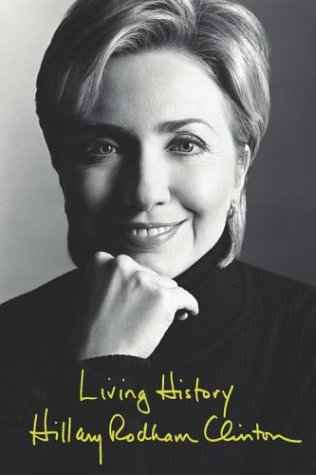 I'm a Hillary fan. I think she has shown concrete policy plans that Obama has not, I appreciate her desire to reform health care, and I respect her experience in the White House during Bill's presidency, as well as on her own in the US Senate. I don't think her initial vote for the war in Iraq is a deal-breaker, since many people on both sides of the aisle thought the war was a good idea at the beginning. I also really enjoyed reading her autobiography, Living History.
But, perhaps the real reason that I want her to win the presidency is because I think it's time that this country recognized that a woman can be president, too. I wouldn't vote for just any woman, but since I agree with Clinton's politics, she has my support.
This past semester, I helped grade for a cultural studies class about the body and issues of representation. One of the issues that we discussed was the complicated ways in which women in power need to be both feminine and masculine--if they're too feminine, they're accused of being weak, ineffective leaders, but if they're too masculine, they're called power-hungry and controlling. Hillary Clinton was one of the women that we looked at more in-depth, and since then, I've been paying a little closer attention to the attention that has been shown her by the media, as well as the way she's presenting herself through her own campaign.
Here are some things that I've found particularly interesting:
 The picture of Hillary on the left is a picture of her greeting an old friend. Apparently, the friend surprised Hillary, catching her off guard, and some photographer managed to catch her at just the wrong moment. This picture was on the "most-emailed" list at YahooNews for several weeks. I find it interesting that her looking, well, slightly evil, is considered newsworthy, not only by the media, but by those who email it to their friends.
Also, as I've been looking for a "Clinton for President 2008" bumper sticker, I've come across some interesting t-shirts and
 stickers. There are quite a large number of shirts that call Hillary a bitch, or even more than that, suggest that her wanting power is a negative character trait. The shirt on the right is one that encapsulates these ideas--the crown on Hillary's head, in particular, is something that I find interesting. Doesn't everyone who run for president want power? I seriously doubt that anyone who runs for president does so merely out of the goodness of his heart. I would imagine that everyone who runs for office does so to some degree because they want power. Yet when Hillary runs for president, suddenly she's "Queen Bitch" and her desire for power is inappropriate.
I'm also interested by the ways that both the media and Hillary's own campaign tries to counteract these negative images of power by embracing her more feminine side. Her video that announced her candidacy, found here, was set in a living room, rather than an office, with soft cushions, curtains, and even flowers in the background. Her continued emphasis on the idea of conversation, by working to talk to people in their living rooms and by even using the phrase "let's chat," brings to mind stereotypical women's spaces and activities. The bumper sticker on the left is another example of this--the soft pink color and the gentle cursive lettering is something you certainly wouldn't find on any of the male candidates' promotional material.
Perhaps the most obvious difference of all is the way she's named herself as a candidate. While we've known all past presidents by their last names--Washington, Lincoln, Roosevelt, Kennedy, Reagan--she has branded herself as a first name. Take a look in the official Hillary Store. Everything says "Hillary for president" rather than "Clinton for president." My initial thought was that perhaps it was a desire to separate her campaign from her husband's, or at least to differentiate between the two. But her campaign has embraced Bill's help, drawing on his expertise and his connections to raise funds and even make ads. When George W. Bush ran for President, he was known officially as Bush, so it seems that the issue at hand is less the issue of the same name and more to do with Clinton's gender. Even in the most basic aspects of her campaign--what she's known as--Hillary Clinton is forced to walk the thin line between being a weak, feminine candidate, and being a power-hungry man-eater.
Other examples you can think of?

Friday, May 25, 2007
My letter to President Bush
I will be out of town this weekend, and not able to post every day, so I thought I'd put up a post that I thought deserved more than just one day in the #1 spot.
As I mentioned before, after reading Al Franken's book Lies and the Lying Liars who Tell Them, I was pretty angry. So angry, in fact, that I wrote a letter to President Bush. I know the odds of anything happening because of it are slim, but I figure that he won't know how outraged people are at his behavior unless we tell him.
And I have to say, writing the letter was pretty cathartic. I'm kind of interested to see how Bush will respond, if he responds at all. I'll definitely let you know if I hear anything back.
If you get angry at my letter, I'd encourage you to voice your opinions--all I'd ask is that you keep your comments on the level of policy, as I tried to do in my letter. Comments that involve name-calling or foul language will be deleted.
Here's the letter:
Dear President Bush,
My name is_______________. I am a 26-year-old graduate student and teacher, and for the last six and a half years, I have watched as you've taken an economically strong, well-respected country and turned us into a pariah with a shaky fiscal future. I would like to take this letter as an opportunity to explain several of the reasons that your actions anger me and why that needs to change.
I am angry because your irresponsible financial policies show no thought for the future. Your deficit spending and tax cuts for people who have more money than they know what to do with are not only a useless way of encouraging economic growth, but they are also creating an enormous national debt that will seriously affect me and others in my generation in areas such as foreign trade and Social Security. You are undermining the future of the country you claim to love.
I am angry that you lied to the American public about weapons of mass destruction in Iraq. According to the latest casualty count, as reported by The Guardian on May 13, 2007, 3391 people in the US military have died because of this war based on your lies. This is unacceptable.
I am angry because of the way you mishandled counterterrorism efforts. You ignored Richard Clarke's recommendations before 9/11--recommendations that could have prevented this tragedy. When you're searching for the cause of the World Trade Center disaster, Mr. President, you need look no further than yourself.
I am angry because of the way you desecrate the environment. Mr. President, I share your faith in Jesus Christ. I believe God gave us this world as a gift that we need to care for, not exploit. Genesis 2:15 says that God gave Adam the Garden of Eden "to work it and take care of it" (NIV). You are not doing a good job of taking care of the earth God gave us. By pulling out of the Kyoto Treaty, and by making the Clean Air and Water Acts less strict, you are encouraging big businesses to treat our natural resources as their own private property. Your responsibility to the American public, and to God, is to protect the natural resources we have, and you are not fulfilling that responsibility.
I am angry because of the disingenuous ways you treat the American family. You act as is life is the most sacred thing, yet by cutting funding for education and by refusing to reform the health care system, you deny many children the chance at a decent life once they are born. You claim that the family is the foundation of our country, but by cutting welfare and other support programs, you force many parents to choose between earning money and spending time with their families. Mr. President, your policies are not protecting the American family--they are destroying it.
I am not the only one who is angry. An NBC/Wall Street Journal poll from the end of April shows that only 32% of the country approves of what you're doing. A Newsweek poll from May has that number even lower--at 28%! Mr. President, over two-thirds of the country thinks that you are NOT doing your job well. This means it is time for you to change what you are doing.
And this brings me to why I am most angry--you just don't care. You show no regard for the millions and millions of people who think you should do things differently, and you continue thinking that you know what's best. You don't. According to the Washington Post as early as June 8, 2005, nearly 75% of US citizens thought the casualties in Iraq were unacceptable. Over half felt that the war had NOT made the US safer. Yet you continued funding the war. Now, almost two years later, you're still not listening. On May 2 of this year, the House and Senate sent you a bill that would pull US troops out of Iraq, yet you ignored them and all of their constituents and vetoed that bill. This lack of accountability is simply unacceptable.
There is time to undo some of the damage you have done. In your last year and a half as president, start listening to the people of the United States. Start listening to the members of Congress. Start listening to other world leaders, such as those at the United Nations. Swallow your pride and ask for advice and help in getting out of the many messes--economic, military, and environmental, to name a few--that you have gotten this country into. To "stay the course," as you put it, will mean disaster.
Please don't send me a letter thanking me for my concern, or even worse, for my support. I don't support you. And I'm not concerned--I'm angry. I don't want to hear more rhetoric about the great things you're doing for the United States. I want to see actions that show you really mean it.
An angry citizen
As I mentioned before, after reading Al Franken's book Lies and the Lying Liars who Tell Them, I was pretty angry. So angry, in fact, that I wrote a letter to President Bush. I know the odds of anything happening because of it are slim, but I figure that he won't know how outraged people are at his behavior unless we tell him.
And I have to say, writing the letter was pretty cathartic. I'm kind of interested to see how Bush will respond, if he responds at all. I'll definitely let you know if I hear anything back.
If you get angry at my letter, I'd encourage you to voice your opinions--all I'd ask is that you keep your comments on the level of policy, as I tried to do in my letter. Comments that involve name-calling or foul language will be deleted.
Here's the letter:
Dear President Bush,
My name is_______________. I am a 26-year-old graduate student and teacher, and for the last six and a half years, I have watched as you've taken an economically strong, well-respected country and turned us into a pariah with a shaky fiscal future. I would like to take this letter as an opportunity to explain several of the reasons that your actions anger me and why that needs to change.
I am angry because your irresponsible financial policies show no thought for the future. Your deficit spending and tax cuts for people who have more money than they know what to do with are not only a useless way of encouraging economic growth, but they are also creating an enormous national debt that will seriously affect me and others in my generation in areas such as foreign trade and Social Security. You are undermining the future of the country you claim to love.
I am angry that you lied to the American public about weapons of mass destruction in Iraq. According to the latest casualty count, as reported by The Guardian on May 13, 2007, 3391 people in the US military have died because of this war based on your lies. This is unacceptable.
I am angry because of the way you mishandled counterterrorism efforts. You ignored Richard Clarke's recommendations before 9/11--recommendations that could have prevented this tragedy. When you're searching for the cause of the World Trade Center disaster, Mr. President, you need look no further than yourself.
I am angry because of the way you desecrate the environment. Mr. President, I share your faith in Jesus Christ. I believe God gave us this world as a gift that we need to care for, not exploit. Genesis 2:15 says that God gave Adam the Garden of Eden "to work it and take care of it" (NIV). You are not doing a good job of taking care of the earth God gave us. By pulling out of the Kyoto Treaty, and by making the Clean Air and Water Acts less strict, you are encouraging big businesses to treat our natural resources as their own private property. Your responsibility to the American public, and to God, is to protect the natural resources we have, and you are not fulfilling that responsibility.
I am angry because of the disingenuous ways you treat the American family. You act as is life is the most sacred thing, yet by cutting funding for education and by refusing to reform the health care system, you deny many children the chance at a decent life once they are born. You claim that the family is the foundation of our country, but by cutting welfare and other support programs, you force many parents to choose between earning money and spending time with their families. Mr. President, your policies are not protecting the American family--they are destroying it.
I am not the only one who is angry. An NBC/Wall Street Journal poll from the end of April shows that only 32% of the country approves of what you're doing. A Newsweek poll from May has that number even lower--at 28%! Mr. President, over two-thirds of the country thinks that you are NOT doing your job well. This means it is time for you to change what you are doing.
And this brings me to why I am most angry--you just don't care. You show no regard for the millions and millions of people who think you should do things differently, and you continue thinking that you know what's best. You don't. According to the Washington Post as early as June 8, 2005, nearly 75% of US citizens thought the casualties in Iraq were unacceptable. Over half felt that the war had NOT made the US safer. Yet you continued funding the war. Now, almost two years later, you're still not listening. On May 2 of this year, the House and Senate sent you a bill that would pull US troops out of Iraq, yet you ignored them and all of their constituents and vetoed that bill. This lack of accountability is simply unacceptable.
There is time to undo some of the damage you have done. In your last year and a half as president, start listening to the people of the United States. Start listening to the members of Congress. Start listening to other world leaders, such as those at the United Nations. Swallow your pride and ask for advice and help in getting out of the many messes--economic, military, and environmental, to name a few--that you have gotten this country into. To "stay the course," as you put it, will mean disaster.
Please don't send me a letter thanking me for my concern, or even worse, for my support. I don't support you. And I'm not concerned--I'm angry. I don't want to hear more rhetoric about the great things you're doing for the United States. I want to see actions that show you really mean it.
An angry citizen
Thursday, May 17, 2007
Al Franken Tells it Like it Is
In the interest of full disclosure, I'm an Al Franken fan. I think it's mostly because he's planning on running for U.S. Senate from Minnesota against Norm Coleman. Now, I'm in favor of anyone left-of-center winning a U.S. Senate or House seat in Minnesota, because it will help balance out that horrible abomination that is Michelle Bachmann.
Lucky for us Minnesotans, like Michelle Bachmann, Al Franken is in direct communication with God.
 In fact, according to Al's book Lies and the Lying Liars Who Tell Them, God told him to write about how Al Gore had really won the election, how Bush had idiotically squandered the nation and world's goodwill after 9/11, and how it was making God mad.
Here's how the conversation between Al and God went:
"Look, God, I'm flattered, but if think you got the wrong guy. The kind of book you're talking about would require months of research."
And God said, "Let there be Google. And let there be LexisNexis."
"Very funny, God. I use Google all the time."
"Yes, I know," God said. "For hot Asian teens."
"You must be thinking of my son, Joe."
"Al? I'm omniscient."
Looks like God (and Al, for that matter) have a pretty good sense of humor. That sense of humor is what makes Franken's book a pretty good read. Like many things written about politics, from people on either side of the aisle, the constant reminder of how strict bipartisanship is screwing over America is a little depressing. And, if you happen to be a huge fan of Ann Coulter or Bill O'Reilly fan, this probably isn't the book for you. Some of the information--about Fox News, or about Cheney and Halliburton, for example--has been repeated in other sources, such as Michael Moore's documentaries.
That said, is is quite funny. I was sitting and reading it on the couch, giggling to myself. My husband would say, "What now?" and I'd read the funny bits out loud to him (he'd already read it). This book would not be a good bus book for me, since the people sitting next to me would think I'm nuts. (For the record, other bad bus books are The Education of Little Tree because it made me cry while I was reading it on the bus and Lolita because I'm pretty sure everyone around me thought I was some sort of pervert. I'm not.)
The other good thing about this book is that it inspired in me a healthy sense of outrage. It's pretty easy to sit on your couch, watch TV, and forget much of the crap the Bush administration has pulled. Reading Franken's book reminded me of a lot of that stuff--and not just stuff that would enrage liberals (like the claims about the 2000 election being rigged), but stuff that should enrage everyone, like the US pulling out of the Kyoto treaty and the enormous increase in the national debt. Books like this, even though they are biased a certain way, are an important part of a democracy because they make their readers feel something--either rage against the author, or rage against what he's writing--and that spurs them to get involved. Stay tuned to see how I've channeled my anger...
At any rate, this week's quote comes from Franken's book. Go ahead, read it. Get it? No? Read it again.....there you go :)
Hehehehe.
Lucky for us Minnesotans, like Michelle Bachmann, Al Franken is in direct communication with God.
 In fact, according to Al's book Lies and the Lying Liars Who Tell Them, God told him to write about how Al Gore had really won the election, how Bush had idiotically squandered the nation and world's goodwill after 9/11, and how it was making God mad.
Here's how the conversation between Al and God went:
"Look, God, I'm flattered, but if think you got the wrong guy. The kind of book you're talking about would require months of research."
And God said, "Let there be Google. And let there be LexisNexis."
"Very funny, God. I use Google all the time."
"Yes, I know," God said. "For hot Asian teens."
"You must be thinking of my son, Joe."
"Al? I'm omniscient."
Looks like God (and Al, for that matter) have a pretty good sense of humor. That sense of humor is what makes Franken's book a pretty good read. Like many things written about politics, from people on either side of the aisle, the constant reminder of how strict bipartisanship is screwing over America is a little depressing. And, if you happen to be a huge fan of Ann Coulter or Bill O'Reilly fan, this probably isn't the book for you. Some of the information--about Fox News, or about Cheney and Halliburton, for example--has been repeated in other sources, such as Michael Moore's documentaries.
That said, is is quite funny. I was sitting and reading it on the couch, giggling to myself. My husband would say, "What now?" and I'd read the funny bits out loud to him (he'd already read it). This book would not be a good bus book for me, since the people sitting next to me would think I'm nuts. (For the record, other bad bus books are The Education of Little Tree because it made me cry while I was reading it on the bus and Lolita because I'm pretty sure everyone around me thought I was some sort of pervert. I'm not.)
The other good thing about this book is that it inspired in me a healthy sense of outrage. It's pretty easy to sit on your couch, watch TV, and forget much of the crap the Bush administration has pulled. Reading Franken's book reminded me of a lot of that stuff--and not just stuff that would enrage liberals (like the claims about the 2000 election being rigged), but stuff that should enrage everyone, like the US pulling out of the Kyoto treaty and the enormous increase in the national debt. Books like this, even though they are biased a certain way, are an important part of a democracy because they make their readers feel something--either rage against the author, or rage against what he's writing--and that spurs them to get involved. Stay tuned to see how I've channeled my anger...
At any rate, this week's quote comes from Franken's book. Go ahead, read it. Get it? No? Read it again.....there you go :)
Hehehehe.
Tuesday, May 15, 2007
In Wisconsin, Favre is King
Well, here's proof that in Wisconsin, there are things more important than politics.
What things, you ask? The Packers. And Brett Favre.
To Wisconsonites (or cheeseheads, as we call ourselves) this is no surprise. Particularly those who live in Green Bay. Heck, there, the Packers are more important than God. Churches schedule services around Packer games. The time that a Packer game fell on Christmas Eve was a little more problematic, but that was Christmas Eve, for pete's sake.
 Republican Senator Sam Brownback, however, apparently had not done his homework when giving a speech at the Republican Party Convention in Lake Geneva on May 11th. The presidential hopeful compared a nation having solid families to a football team having a strong offensive line. He said, "This is your line in football. If you don't have a line, how many passes can Peyton Manning complete? Greatest quarterback, maybe, in NFL history."
Peyton who? Silly Sam. This is Wisconsin! Only one football team matters here, and that's the team led by Saint Favre. If he ran for President, Wisconsin would go 100% green and gold, rather than red or blue.
This statement by a Republican presidential hopeful didn't go over well with the crowd of Republicans. That's right. Political affiliation--whatever. Football loyalty--that's what matters.
(For those of you who are wondering if this post is tongue-in-cheek, it is. Mostly.)
Brownback, who's from Kansas, realized his mistake, and tried to backpedal, offering up Bart Starr as the next potential greatest quarterback of all time. Still no good. Better, but not great.
 He gives in, and uses Favre as his example, asking how many passes he'd complete without a line. Several energetic fans yelled, "All of them!" And, if you've watched Favre when he's on, you know that when he's running around, out of the pocket, he's unstoppable. Doesn't do much for Brownback's analogy, though.
Brownback realized this, and gave up: "I'm not sure how I recover from this. My point is we've got to rebuild the family. I'll get off this."
Good plan, Sam. Next time, do a little more research on your demographic.
Then again, if Favre gets traded like he's asked for, expect that love and adoration to turn to intense feelings of betrayal. Hell hath no fury like a Packer fan scorned, or so they say.
C'mon Favre--Moss?! I know you want to win, but it's just not worth the aggravation.
What things, you ask? The Packers. And Brett Favre.
To Wisconsonites (or cheeseheads, as we call ourselves) this is no surprise. Particularly those who live in Green Bay. Heck, there, the Packers are more important than God. Churches schedule services around Packer games. The time that a Packer game fell on Christmas Eve was a little more problematic, but that was Christmas Eve, for pete's sake.
 Republican Senator Sam Brownback, however, apparently had not done his homework when giving a speech at the Republican Party Convention in Lake Geneva on May 11th. The presidential hopeful compared a nation having solid families to a football team having a strong offensive line. He said, "This is your line in football. If you don't have a line, how many passes can Peyton Manning complete? Greatest quarterback, maybe, in NFL history."
Peyton who? Silly Sam. This is Wisconsin! Only one football team matters here, and that's the team led by Saint Favre. If he ran for President, Wisconsin would go 100% green and gold, rather than red or blue.
This statement by a Republican presidential hopeful didn't go over well with the crowd of Republicans. That's right. Political affiliation--whatever. Football loyalty--that's what matters.
(For those of you who are wondering if this post is tongue-in-cheek, it is. Mostly.)
Brownback, who's from Kansas, realized his mistake, and tried to backpedal, offering up Bart Starr as the next potential greatest quarterback of all time. Still no good. Better, but not great.
 He gives in, and uses Favre as his example, asking how many passes he'd complete without a line. Several energetic fans yelled, "All of them!" And, if you've watched Favre when he's on, you know that when he's running around, out of the pocket, he's unstoppable. Doesn't do much for Brownback's analogy, though.
Brownback realized this, and gave up: "I'm not sure how I recover from this. My point is we've got to rebuild the family. I'll get off this."
Good plan, Sam. Next time, do a little more research on your demographic.
Then again, if Favre gets traded like he's asked for, expect that love and adoration to turn to intense feelings of betrayal. Hell hath no fury like a Packer fan scorned, or so they say.
C'mon Favre--Moss?! I know you want to win, but it's just not worth the aggravation.
Friday, January 26, 2007
Remember, remember, the fifth of November...
 I know that V for Vendetta has been out on DVD for a while now, but we just got it at our house, giving me the chance to watch it again. I think it's a brilliant film, with both Natalie Portman and Hugo Weaving turning in fantastic performances. Special credit should go to Weaving who manages to convey amazing depth of emotion from behind a mask.
For those of you who haven't seen the movie, I would suggest skipping the rest of this post, as it contains spoilers, watching the movie, and then coming back and reading the rest.
As I watched the movie for a second time, I was able to concentrate much more on the political significance of what was being said, rather than on my concern for Evey and my curiosity about V himself. And as I watched, I was struck by a number of things:
First, V is described by the media as a terrorist, yet the viewer sides with him when watching the film. Why? Because we see the person behind the label; we see a person who has been scarred and nearly killed by an oppressive government, and we think he is justified in doing what he's doing. If we think about the word "terrorist" in our society today, so often we don't think of "terrorists" as anything but that, often applying that same label to anyone who even just looks like them or shares their faith. This is hardly fair. Our ability to empathize with V should suggest a similar possibility with those labeled "terrorists" in our world, and offers a solution to our conflicts based on mutual understanding, rather than bloodshed and war.
My second point is perhaps more controversial, but I mean no disrespect by it. Rather, I just want to point out how V for Vendetta encourages the viewer to see the other side of 9/11, the side that would claim that the attacks on the World Trade Center and the Pentagon were completely justified, and were done to upset an unfair balance of power in the world. When Evey wakes up at V's mansion after passing out in distress, she asks him, "You really think that blowing up Parliament is going to make this country a better place?"
After a bit of conversation, V replies, "The building is a symbol, as is the act of destroying it. Symbols are given power by people; alone, a symbol is meaningless, but with enough people, blowing up a building can change the world."
When we think about the blowing up of Parliament in the movie, such a statement seems completely logical and justifiable. But what happens when we think about such a statement in the context of the United States? Now, I in no way want to say that the bombings of 9/11 were justifiable; the loss of life was horrific. Rather, I just want to suggest that our ability to understand V's perspective in V for Vendetta offers us a unique opportunity to consider the other side of the 9/11 bombings, and once again, offers us a possibility for understanding, rather than hate and war.
Finally, while the obvious heroes of the movie are V and Evey, and to a lesser degree, Inspector Finch, I would like to point out that without the act of one soldier, all their efforts would have been in vain. At the end of the movie, when thousands of people are marching on Trafalgar Square dressed in masks and capes, the army has been given the order to shoot them. In a scene the brings a lump to my throat every time I watch it, the ranking officer orders the troops, "Stand down!" thus allowing the crowd to march forward and preventing the loss of thousands of lives. In my estimation, this one soldier is the unsung hero of this movie, the man who truly made V's vision a reality. This is the kind of heroism that our country needs, even more than V's. Not large grandiose gestures like blowing up a building, but one person, defying the wishes of the government and standing up for what he believes is right.
So when you hear the 1812 Overture, "remember, remember, the 5th of November..."
Friday, January 12, 2007
Code of Silence
I'm a pretty big fan of Bruce Springsteen, and I've been listening to The Essential Bruce Springsteen recently. This week's quote is from "Dead Man Walkin'" on that album. When I heard the song "Code of Silence," it struck me as something relevant to our current political situation. Even though the song, written in 1997 with Joe Gruschecky, is about the relationship between two people, it can also describe the relationship between the American people and the Bush administration. Here are some of the lyrics:
There's a code of silence that we don't dare speak
There's a wall between us and a river so deep
We keep pretending that there's nothing wrong
But there's a code of silence and it can't go on
Is the truth so elusive, so elusive you see
That it ain't enough baby, to bridge the distance between you and me
There's a list of grievance a 100 miles long
There's a code of silence and it can't go on
Well you walk with your eyes open
But your lips they remain sealed
While the vows we made are broken
Beneath the truth you need to reveal
Well I came to know now darlin'
Need to know what's going on
But come on, come on, come on, come on
Come on, come on, come on
Now you walk with your eyes open
But your lips they remain sealed
While the vows we made are broken
Beneath the truth we fear to reveal
I need to know now darlin'
Need to know what's going on
So come on, come on, come on, come on
Much of what Springsteen sings about--broken vows, lists of grievances, code of silence, truth that needs to be revealed--can easily be read as commentary on the war in Iraq. In fact, his song is almost a musical version of the recent Chicago Tribune op-ed piece by Geoffrey R. Stone and William P. Marshall entitled "Secrecy, the Enemy of Democracy," which puts a charge on the American people not to blindly trust their president, but to insist on transparency in public policy. One of the most provocative lines for me in this essay reads, "Secrecy is the ultimate form of censorship because the people do not even know they are being censored." Knowledge is power, and in order to assert our power as citizens, we need to be informed about the president's policies and speak up. No more hiding behind the flag or the ideal of patriotism as the reason to blindly follow the president into Iraq.
The thing is, though--and I think this might scare me more than ever--the people have spoken, and Bush simply isn't paying any attention. Recent polls show over 60% of Americans opposing the war in Iraq, with some polls even showing that 70% of American people oppose sending more troops to Iraq. And then President Bush goes and announces his "surge." What is he thinking? He is so far out of touch with what the country wants; in fact, his recent plan forIraq has been met with condemnation from both sides of Congress. Bush is apparently stunned that his plan hasn't been met with approval.
It seems that this line from Springsteen's song is particularly applicable in this case:
Is the truth so elusive, so elusive you see
That it ain't enough baby, to bridge the distance between you and me.
The truth--be it the dismal military situation in Iraq, the lack of weapons of mass destruction, or even the people's opinion--isn't enough to change Bush's mind about Iraq, because he has his own personal agenda to accomplish there. We need leaders who will put the truth and the needs of their constituents first, rather than basing important public policies on what they, and they alone, think is right. As we gear up for the 2008 presidential elections, let's work to support candidates who promote transparency in governmental policies, rather than those who espouse secrecy and a "code of silence."
There's a code of silence that we don't dare speak
There's a wall between us and a river so deep
We keep pretending that there's nothing wrong
But there's a code of silence and it can't go on
Is the truth so elusive, so elusive you see
That it ain't enough baby, to bridge the distance between you and me
There's a list of grievance a 100 miles long
There's a code of silence and it can't go on
Well you walk with your eyes open
But your lips they remain sealed
While the vows we made are broken
Beneath the truth you need to reveal
Well I came to know now darlin'
Need to know what's going on
But come on, come on, come on, come on
Come on, come on, come on
Now you walk with your eyes open
But your lips they remain sealed
While the vows we made are broken
Beneath the truth we fear to reveal
I need to know now darlin'
Need to know what's going on
So come on, come on, come on, come on
Much of what Springsteen sings about--broken vows, lists of grievances, code of silence, truth that needs to be revealed--can easily be read as commentary on the war in Iraq. In fact, his song is almost a musical version of the recent Chicago Tribune op-ed piece by Geoffrey R. Stone and William P. Marshall entitled "Secrecy, the Enemy of Democracy," which puts a charge on the American people not to blindly trust their president, but to insist on transparency in public policy. One of the most provocative lines for me in this essay reads, "Secrecy is the ultimate form of censorship because the people do not even know they are being censored." Knowledge is power, and in order to assert our power as citizens, we need to be informed about the president's policies and speak up. No more hiding behind the flag or the ideal of patriotism as the reason to blindly follow the president into Iraq.
The thing is, though--and I think this might scare me more than ever--the people have spoken, and Bush simply isn't paying any attention. Recent polls show over 60% of Americans opposing the war in Iraq, with some polls even showing that 70% of American people oppose sending more troops to Iraq. And then President Bush goes and announces his "surge." What is he thinking? He is so far out of touch with what the country wants; in fact, his recent plan forIraq has been met with condemnation from both sides of Congress. Bush is apparently stunned that his plan hasn't been met with approval.
It seems that this line from Springsteen's song is particularly applicable in this case:
Is the truth so elusive, so elusive you see
That it ain't enough baby, to bridge the distance between you and me.
The truth--be it the dismal military situation in Iraq, the lack of weapons of mass destruction, or even the people's opinion--isn't enough to change Bush's mind about Iraq, because he has his own personal agenda to accomplish there. We need leaders who will put the truth and the needs of their constituents first, rather than basing important public policies on what they, and they alone, think is right. As we gear up for the 2008 presidential elections, let's work to support candidates who promote transparency in governmental policies, rather than those who espouse secrecy and a "code of silence."
Subscribe to:
Posts (Atom)